The FIFA World Cup 2026 unfolds across 16 stadiums in the United States, Mexico and Canada from June 11 to July 19, with 48 teams vying for the title. Venue selection—from Mexico City’s altitude to Dallas’s 94,000-seat behemoth—will influence match rhythm, atmosphere and tactical choices as much as the squads themselves.
FIFA World Cup 2026 stadium guide: venues, fixtures and what matters
Tournament overview
The expanded 48-team World Cup is not just about more matches; it’s about geography shaping outcomes. Travel, climate, altitude and crowd dynamics across three countries will test squad depth and logistical savvy. Expect familiar powers (Argentina, Brazil, France, Spain, England) to face fresh variables, while cohosts leverage home support and venue quirks.

Host cities and stadiums — every venue explained
Atlanta Stadium — Atlanta, Georgia (Capacity: 75,000; Built: 2017)
Fixtures include Spain vs Cape Verde and Morocco vs Haiti, plus a semifinal slot. The Mercedes‑Benz Stadium’s retractable roof and halo video display deliver spectacle. Spain’s group games here underline Atlanta’s role as a showcase for top contenders — and a potential pressure cooker for tactical rigidity under bright lights.
Boston Stadium (Gillette) — Foxborough, Massachusetts (Capacity: 65,000; Built: 2002)
Hosts England vs Ghana and Norway vs France among others, plus a Round of 16. Renovations added one of the largest outdoor HD boards in the U.S. The venue’s New England location suits transatlantic fanbases and high-profile fixtures that will test teams used to European rhythms.
Dallas Stadium — Arlington, Texas (Capacity: 94,000; Built: 2009)
Key fixtures: Netherlands vs Japan, Argentina vs Austria, and a semifinal. The largest stadium of the tournament will stage nine matches. Its sheer scale and corporate spectacle — “Jerry World” — can amplify momentum swings and intimidate smaller teams unaccustomed to that pressure.
Houston Stadium — Houston, Texas (Capacity: 72,000; Built: 2002)
Hosts Germany vs Curacao and Portugal vs Congo DR, plus a Round of 16. The retractable-roof stadium’s heat and humidity management will be crucial; tactical coaches will factor conditions into rotation strategies.
Kansas City Stadium (Arrowhead) — Kansas City, Missouri (Capacity: 73,000; Built: 1972)
Features Argentina vs Algeria and an early semifinal. Arrowhead’s famously deafening atmosphere is a tangible home‑field advantage for teams that thrive on crowd energy; opponents must be mentally prepared for relentless noise.
Los Angeles Stadium (SoFi) — Inglewood, California (Capacity: 70,000; Built: 2020)
USA opens vs Paraguay here and the venue hosts a quarterfinal. As the newest stadium, SoFi is set up for spectacle and will be central to U.S. tournament narratives — media attention, star turns and domestic expectations converge here.
Miami Stadium (Hard Rock) — Miami Gardens, Florida (Capacity: 65,000; Built: 1987)
Hosts Saudi Arabia vs Uruguay, Scotland vs Brazil, and a quarterfinal. Miami’s climate and party atmosphere can boost teams with fast flair while draining those reliant on methodical buildup.
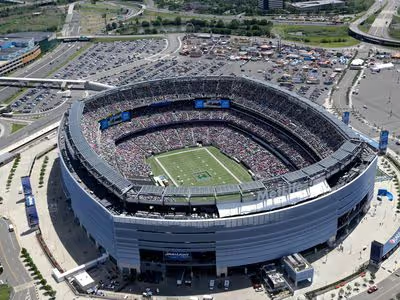
New York/New Jersey Stadium (MetLife) — East Rutherford, New Jersey (Capacity: 82,500; Built: 2010)
Home of the final on July 19 and Brazil vs Morocco among group fixtures. MetLife’s selection for the final is a clear message: capacity and infrastructure trump nostalgia. The stadium’s metropolitan market ensures global attention and intense pressure for finalists.
Philadelphia Stadium (Lincoln Financial Field) — Philadelphia, Pennsylvania (Capacity: 69,000; Built: 2003)
Features Ivory Coast vs Ecuador and France vs Iraq plus a Round of 16. A familiar NFL venue that adapts well to football’s tempo; expect tactical boards and noise to influence set-piece strategies.
San Francisco Bay Area Stadium (Levi’s) — Santa Clara, California (Capacity: 71,000; Built: 2014)
Hosts Qatar vs Switzerland and Paraguay vs Australia. As a West Coast venue with savvy tech-market audiences, Levi’s will be a hub for global fanbases and logistical emphasis on recovery between long flights.
Seattle Stadium (Lumen Field) — Seattle, Washington (Capacity: 69,000; Built: 2002)
Hosts Belgium vs Egypt and USA vs Australia, plus a Round of 16. The stadium’s open north end and skyline backdrop create a unique atmosphere; travel from other U.S. hubs will force disciplined planning for teams.
Toronto Stadium — Toronto, Ontario, Canada (Capacity: 45,000; Built: 2007)
Canada opens vs Bosnia and Herzegovina here. As Canada's primary World Cup venue, the stadium’s compact bowl and vocal support give the national side a distinct home advantage in a market hungry for major‑tournament football.
BC Place — Vancouver, British Columbia, Canada (Capacity: 54,000; Built: 1983)
Hosts Australia vs Turkiye and Canada vs Qatar, plus a Round of 16 match. BC Place’s history with women's and youth finals adds a legacy feel; West Coast weather and travel time from U.S. venues matter for scheduling.
Mexico City Stadium (Estadio Azteca) — Mexico City, Mexico (Capacity: 83,000; Built: 1966)
Hosts the opening match — Mexico vs South Africa — and multiple group fixtures. The renovated Azteca, at 2,200m altitude, is tournament-defining. Altitude can blunt pressing strategies and favor teams that prepare physiologically; hosting the opener gives Mexico momentum and national expectation.
Estadio Guadalajara (Estadio Akron) — Zapopan, Jalisco, Mexico (Capacity: 48,000; Built: 2010)
Hosts Mexico vs South Korea and Uruguay vs Spain. Guadalajara’s intimate, coliseum-like setting suits high-intensity contests and provides an intense atmosphere for marquee matchups.
Estadio Monterrey — Guadalupe, Nuevo León, Mexico (Capacity: 53,500; Built: 2015)
Features Sweden vs Tunisia and a pivotal group match schedule. Monterrey’s modern facilities and passionate local support make it a tough venue for visiting teams, especially those unused to Mexico’s regional variations.
What this venue map means for teams and tactics
Geography is a variable coaches can’t ignore. Altitude in Mexico City, humidity in Houston and Miami, and cross‑country travel between cohost nations will favor squads with depth and meticulous rotation plans. Crowd noise and stadium size influence momentum; big arenas can either elevate superstars or fluster less experienced players.
Final takeaways
The 2026 World Cup will be decided as much by venue dynamics as by starting elevens. Stadium selection deliberately balances spectacle and legacy — MetLife hosts the final, Azteca claims the opener — setting up narratives about tradition versus modernity.
The World Cup is packed with superstars
For teams, preparation that accounts for travel, climate and atmosphere will be as decisive as tactical acumen on matchday. The tournament kicks off June 11 — expect venue storylines to shape the road to the final.
 Al Jazeera