
Manchester City's latest proposal — a £106m guaranteed fee plus £15m in add-ons for England midfielder Elliot Anderson — has been turned down by Nottingham Forest, who insist on a £120m-plus guaranteed transfer. The standoff has become one of the summer's major transfer sagas, with Enzo Maresca eyeing Anderson while rival interest from Manchester United strengthens Forest’s bargaining position.
Man City bid rejected as Forest hold out for £120m-plus
Manchester City advanced a substantially improved offer for 23-year-old Elliot Anderson: £106m guaranteed with up to £15m in add-ons. Nottingham Forest rejected the package, demanding a flat, fully guaranteed fee above £120m.
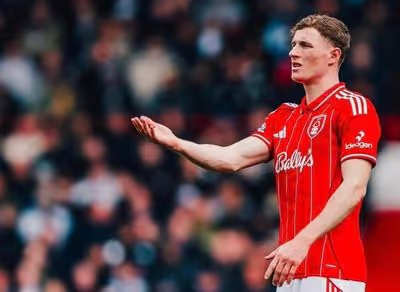
The refusal underlines Forest’s determination to extract maximum value rather than accept conditional terms.
Why Forest can set the price
Forest's stance is grounded in leverage. Anderson is a young England international with rising profile, and concrete interest from other top clubs has strengthened Forest’s negotiating hand. Asking for a fixed fee protects Forest against uncertain performance-related payments and signals they view Anderson as central to both sporting ambitions and transfer-market value.
What Anderson brings and why Enzo Maresca wants him
Anderson combines energy, box-to-box range and progressive passing that suits a high-possession, rotational midfield. New Manchester City manager Enzo Maresca appears to see him as a tactical building block — a player capable of linking defence to attack while adding dynamism to the middle third. For a team planning to refresh its engine-room, Anderson fits the profile of a younger, long-term option.
Strategic concerns for City
City must weigh paying a premium against squad balance and financial discipline. A guaranteed £120m-plus outlay for a 23-year-old would be a statement signing, but also a significant investment in potential rather than established elite output. Manchester City likely assess that his age and English eligibility justify the cost in the long term, but the decision will test internal valuation thresholds.
Alternatives and the wider transfer landscape
Reports suggest City have other names on the shortlist, including Sandro Tonali, indicating they are keeping options open while negotiations continue. The competition for midfield reinforcements — and the involvement of rivals — is pushing valuations higher across the market, forcing clubs to decide whether to meet elite asking prices or pivot to alternatives.
Record implications if fee hits Forest’s demand
A guaranteed fee north of £120m would place Anderson among the most expensive transfers in Premier League history and would set a new benchmark for British players. That would further escalate market comparables for elite domestic talent and reinforce a trend of clubs paying sizable premiums to secure Premier League-ready prospects.
What happens next
Expect renewed talks rather than an immediate resolution. City can return with a higher guaranteed offer, push for a compromise on structure, or shift pursuit toward other targets. Forest's insistence on a flat fee makes a rapid deal less likely, but mutual incentives—City’s desire to bolster midfield and Forest’s appetite for a major sale—mean a settlement remains probable before the window closes.
Why this matters
This saga highlights the growing power of selling clubs in the post-peak-money market and the premium placed on young, English internationals.
The 20 most expensive defenders ever: Jacquet enters above Iraola masterstroke
For Manchester City, the outcome will reveal how far they are willing to go to secure long-term midfield reinforcement; for Forest, it’s a test of transfer-market ambition and valuation discipline.
 Caughtoffside