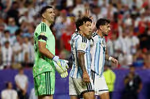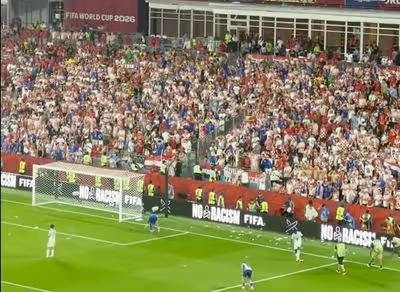
Croatia’s World Cup hopes ended in chaos at BMO Field after VAR overturned what looked like a stoppage-time equaliser, sparking fans to hurl debris onto the pitch and leaving players, officials and viewers furious. The disallowed goal — ruled out for a marginal offside after a head flick altered the attacking line — confirmed Portugal’s progression and intensified the debate over VAR’s use in tight, game-defining moments.
Late VAR reversal shatters Croatian comeback — Portugal advance
The Round of 32 tie at BMO Field finished amid uproar after Croatia thought they had forced a dramatic 2-2 draw in stoppage time in the World Cup. Josko Gvardiol's close-range strike in the 13th minute of added time initially sent Croatian players and supporters into raptures, only for the goal to be overturned following a VAR review.
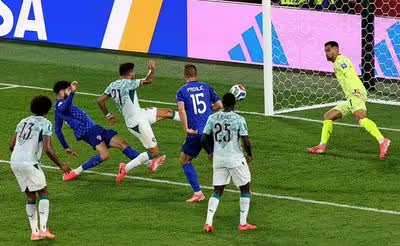
The video assistant referee ruled Mario Pasalic was offside after a minimal head flick from Igor Matanovic altered the trajectory and Pasalic’s position. That intervention nullified the finish and confirmed Portugal’s win, ending Croatia’s tournament run.
How the offside was decided
VAR officials determined the decisive touch changed the offside picture. While the initial cross from Ivan Perisic put Pasalic onside, the subsequent touch shifted the sequence enough, in the view of the review team, to place him in an offside position when Gvardiol scored.
This was not the first marginal call in the match: Cristiano Ronaldo also had a goal ruled out earlier for a tight offside, and later converted a penalty before being substituted. Those calls framed the contest as one shaped as much by technology as by the players on the pitch.
Fan fury and pitch disruption
The disallowance prompted visceral reactions from traveling Croatian supporters, who threw bottles and other debris onto the turf, briefly halting the game. Players from both sides cleared the field amid jeers and stunned silence, highlighting the emotional weight of a decision made off-camera.
The scene underscored how VAR interventions — especially at pivotal moments — can provoke intense backlash and question the perceived fairness of match-deciding rulings.
What this means for Portugal, Croatia, and the wider VAR debate
Portugal progress but leave behind a match dominated by controversy rather than quality. For Ronaldo, the game reinforced his ability to influence results while exposing how marginal VAR calls can reshape narratives around a player’s legacy.
For Croatia, exiting at this stage is bitter, and the overturned equaliser will sting as much as the defeat itself. Luka Modric’s tournament swansong — if indeed this marks his final World Cup appearance — will be remembered for its abrupt, disputed ending rather than a fair measure of the team’s performance.
Analytically, the incident will reheat calls for clearer, more consistent VAR protocols on marginal offsides. Fans and pundits alike will point to the emotional cost of decisions decided by millimetres and milliseconds, a tension that governing bodies must address if technology is to preserve, not undermine, the drama of football.
Next steps and likely fallout
Expect immediate post-match discussions among federation officials and refereeing panels about how such situations are handled and communicated. While appeal options are limited for on-field decisions confirmed by VAR, the reputational fallout — among fans, broadcasters and players — will be the longer-lasting consequence.
Xhaka keeps World Cup focus as Chelsea prepare improved offer after Sunderland refusal
On the pitch, Portugal advance and must refocus quickly; Croatia must regroup, process the elimination, and consider what lessons to take forward from a match defined as much by replay angles as by individual moments of quality.
 Daily Express Us