
After video showed Ester Expósito dancing with Bad Bunny at a VIP concert—and Kylian Mbappé absent—Expósito publicly pushed back against a social-media backlash, calling the criticism “outdated puritanism” and defending her freedom to dance and enjoy reggaeton. The episode has briefly drawn attention away from Mbappé’s stellar on-field form for France and Real Madrid, raising questions about celebrity scrutiny and double standards.
What happened: Bad Bunny video sparks criticism
A video circulated showing actress Ester Expósito in a VIP area dancing briefly with Bad Bunny during his performance. Kylian Mbappé was not present at the concert, and the clip prompted a wave of social-media commentary questioning the optics of the interaction given Expósito’s high-profile relationship with the France captain.
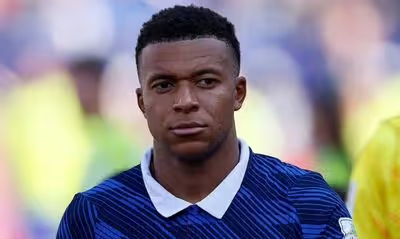
Short clips and hot takes spread quickly, turning a few seconds of on-stage dancing into a trending story that pulled focus from football headlines.
Ester Expósito’s public response
Expósito addressed the backlash on Spanish television, calling the reaction “outdated puritanism.” She defended her right to enjoy reggaeton and to dance as she pleases, saying critics were using feminist language to police women’s behavior.
Her statement reframed the incident as a cultural debate about autonomy and hypocrisy, rather than a personal scandal. That pushback shifted the narrative away from rumor and toward a broader discourse on how women in the public eye are judged.
Why this matters for Mbappé, Real Madrid and France
Kylian Mbappé is one of the world’s most scrutinized athletes; off-field stories can become distractions during critical competitive periods. The timing—coming while Mbappé remains a focal point for France and is a headline performer for Real Madrid—means even peripheral attention can reverberate in media cycles.
On the pitch Mbappé’s recent form is the core story: he has been pivotal for France in major tournaments and has posted prolific numbers for Real Madrid, with the club appearances and goal totals underscoring his value. Still, modern footballers increasingly contend with celebrity-level scrutiny that can shift narratives away from sporting performance.
The broader issue: double standards and social-media pile-ons
This episode exposes familiar dynamics: women face disproportionate judgment for casual interactions that rarely draw comparable criticism when men are involved. Social-media pile-ons tend to amplify that imbalance, forcing public figures to respond to defend basic freedoms of expression and movement.
Expósito’s rebuttal — invoking feminism and personal liberty — was a calculated move to reclaim the story on her terms, and it highlights how celebrity couples must navigate both public perception and cultural debates.
What could happen next
Expect the controversy to cool unless new developments emerge. For Mbappé and his teams, the pragmatic approach is containment: maintain professional focus, let performance dominate coverage. For Expósito, the incident may strengthen her public positioning as someone unwilling to accept gendered policing.
Longer term, the episode is a reminder that sports coverage now routinely intersects with entertainment culture; clubs and national teams must be prepared to manage peripheral noise while preserving player welfare and concentration.
Bottom line
A short moment on stage turned into a flashpoint about privacy, gender and celebrity.
The athletic story remains Mbappé’s performance; the cultural story is whether public reaction will prompt reflection on double standards — or simply move on to the next viral moment.
 Daily Express Us