
Angel Cabrera’s appearance at the Champions Dinner hosted by Rory McIlroy reopened debates about redemption and accountability in golf after the 2009 Masters champion—recently released from a 30‑month sentence for domestic violence—said he was warmly received and intends to "do things right" in his second chance, a moment that highlights tension between tradition at Augusta National and the sport’s broader ethical scrutiny.
Angel Cabrera’s Champions Dinner Return Sparks Conversation at the Masters
Rory McIlroy’s decision to welcome Angel Cabrera at the Champions Dinner put a spotlight on how elite golf balances tradition, forgiveness and public scrutiny. Cabrera, the 2009 Masters and 2007 U.S. Open champion, told reporters at the Senior PGA Championship that he was greeted warmly and enjoyed reconnecting with longtime peers at Augusta National.
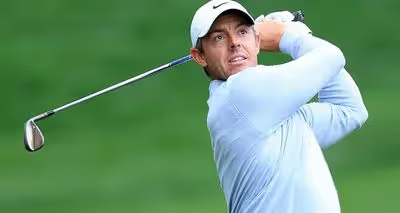
What happened at the Champions Dinner
Cabrera attended the Greens Jacket‑holder gathering hosted by McIlroy, who recently rejoined the Masters winners’ ranks. The exchange was cordial; Cabrera said he appreciated the reception and emphasized gratitude for what he called a “second opportunity.” His comments came amid renewed attention to his legal history and his reappearance at the first major of the 2026 season.
Context: Cabrera’s legal troubles and return
The Argentine golfer served a 30‑month prison sentence in 2023 related to domestic violence convictions and returned to competition at Augusta National in April of the previous year. His presence at the 2026 Masters and the Champions Dinner has been polarizing: some players and fans view his reintegration as a sign of forgiveness, others see it as premature given the severity of his offenses.
Why this matters for the Masters and the PGA Tour
Augusta National’s Champions Dinner symbolizes the sport’s continuity and camaraderie. Inviting a controversial figure back into that inner circle is more than a personal reunion; it’s a statement about the values the club and the broader golf community choose to prioritize. The optics matter in an era when sports organizations face heightened expectations around conduct and accountability.
Impact on the tournament’s image
Augusta National is fiercely protective of tradition, but traditions are not immune to cultural shifts. A warm reception for Cabrera risks alienating segments of golf’s audience that demand clearer boundaries between on‑course achievements and off‑course behavior. Conversely, some insiders argue that letting players rebuild relationships within the game is part of a restorative approach to rehabilitation.
Players, history and the human element
Cabrera’s history with McIlroy adds layers to the encounter. The two were linked dramatically in 2011 when Cabrera was in McIlroy’s group as the young star imploded on the final day. Years later, McIlroy received a note from Cabrera before his breakthrough Masters victory, a gesture that underscores their shared history and personal rapport.
How peers are likely to react
Public reactions will vary. Some players will privately welcome a familiar figure back into the fold, while others may prefer to keep distance to avoid endorsing conduct they find unacceptable. That split mirrors broader societal debates over how to weigh exceptional athletic achievement against serious misconduct.
What this means going forward
Cabrera’s appearance forces golf’s institutions to clarify their stance on reintegration and reputation management. Expect continued scrutiny of Augusta National’s guest list and the way PGA Tour events handle players with troubled pasts. For Cabrera personally, attending the Champions Dinner and publicly committing to better behavior signals a desire to rehabilitate his image—but acceptance within the sport may be uneven and contingent on sustained conduct, not single gestures.
Possible next steps
Augusta and fellow players are unlikely to make hasty policy moves, but the episode increases pressure on governing bodies and clubs to set transparent standards for participation and honors. Media attention will keep the issue active; how the golf community responds will shape precedent for future cases involving off‑course conduct.
Final take
Cabrera’s warm reception at a moment steeped in tradition highlights a clash between nostalgia and modern accountability. The Champions Dinner is a small, symbolic stage—but symbolism matters.
20 Greatest European Golfers in History [Ranked]
The way golf reconciles extraordinary careers with serious personal failings will define its public standing in the years ahead, and this episode is a clear test of where the sport draws its lines.
 Daily Express Us