
Football’s 2026 World Cup shapes up as a farewell stage for a generation of global superstars — from Cristiano Ronaldo and Lionel Messi to Neymar, Luka Modric and Manuel Neuer — whose experience will shape expectations, group dynamics and title races across Portugal, Argentina, Brazil, Croatia and Germany. Their form, fitness and final role in the squad will be decisive for each nation’s realistic ambitions in North America.
World Cup 2026: The likely final bow for football’s biggest names
Veteran stars are lining up for what looks like one last dance on football’s biggest stage. Cristiano Ronaldo, Lionel Messi, Neymar, Luka Modric, Manuel Neuer, Mohamed Salah, James Rodríguez and Riyad Mahrez headline a list of players whose presence will be as strategic as it is symbolic.
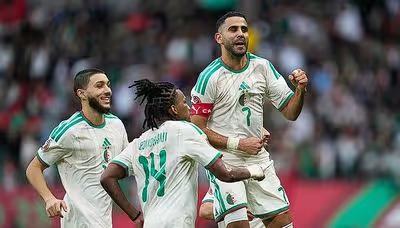
Their availability, minutes and roles will influence group outcomes and the knockout picture long before any tactical masterstrokes from managers.
Why these farewells matter
These players aren’t just headline names; they are central pieces of identity and game-plan for their nations. Where a coach once built a team around youthful energy, many are now balancing that with the finishing instincts, leadership and set-piece savvy of seasoned campaigners. The 2026 tournament will test how well nations transition from legend-led templates to the next generation.
Cristiano Ronaldo — Portugal
Ronaldo remains the defining figure of Portugal’s attack and will influence selection and tactics whether he starts or comes off the bench. His knack for decisive finishes and aerial threat force opponents to allocate resources to contain him, freeing space for teammates. For Portugal, the key question is balance: how to harness Ronaldo’s goalscoring instincts without stifling a dynamic, younger midfield and forward line.
Lionel Messi — Argentina
Even after achieving World Cup glory in 2022, Messi’s presence carries tactical nuance — switching between orchestrator and impact substitute. Argentina’s manager must manage minutes if fitness is a concern, using Messi as a match-decider rather than an engine. That approach could keep Argentina competitive while preserving his influence in the tournament’s latter stages.
Neymar — Brazil
Neymar remains Brazil’s most mercurial attacking outlet, capable of turning tight games with individual brilliance. Injury management will dictate his contribution; when fit, he alters defensive priorities and creates space for attacking partners. For Brazil, the calculus is clear: protect Neymar’s fitness early to maximise his influence when knockout stakes rise.
Luka Modric — Croatia
Modric’s cerebral control and tempo management remain invaluable to Croatia. Even if his physical output declines, his positional intelligence and passing quality extend Croatia’s competitive window. Modric’s likely swansong will be measured less in minutes and more in the tempo and composure he injects into key moments.
Manuel Neuer — Germany
Neuer’s role extends beyond shot-stopping; his ball-playing and defensive organisation underpin Germany’s build-up. As a veteran presence, Neuer offers a template for younger keepers on how to manage high defensive lines. His inclusion signals Germany’s intent to keep control of possession and maintain their contemporary identity even as squad renewal continues.
Mohamed Salah — Egypt
Salah is Egypt’s talisman and their chief outlet in transition play. His leadership and ability to create and finish chances make him Egypt’s best hope of advancing from a difficult group. Salah’s form and club situation will influence whether Egypt can expect a deeper run or an early exit.
James Rodríguez — Colombia
James’ creative instincts and set-piece quality can unlock tight matches. Colombia will rely on his vision to connect midfield to attack and supply their forwards. If Colombia manage his workload and protect him from injuries, James could cap his international career by cementing his place in national lore rather than simply chasing individual milestones.
Riyad Mahrez — Algeria
Mahrez offers Algeria unpredictability and technical finesse on the flank. His ability to produce game-changing moments from the wing makes him dangerous in one-off knockout ties. For Algeria, Mahrez’s leadership and experience improve the team’s chances of translating continental pedigree into World Cup progress.
Squad management and tournament dynamics
Coaches must juggle short-term gains with long-term squad planning. Veteran stars provide instant quality and leadership, but overreliance can stall the emergence of younger players. Managers who rotate intelligently — protecting fitness while using experience for key phases — will extract the most value from these legends.
What to watch during the group stage
Availability and minutes are the immediate storylines. Early injuries or heavy minutes will force tactical shifts; conversely, measured use of veterans can produce decisive late-tournament performances. Expect teams with a clearer succession plan to outlast those dependent on a single star’s final hurrah.
Final take
The 2026 World Cup promises a compelling mix of sentiment and strategy. These likely final World Cup appearances are more than ceremonial: they will directly alter tactical plans, group outcomes and knockout prospects.
In Paraguay, USMNT will find an unfazed, deep-feeling World Cup foe up for a fight
How managers balance reverence with realism will determine whether these farewells become fitting finales or nostalgic footnotes.
 Mail Online