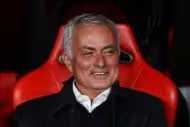
Jose Mourinho’s 2023 broadside against referee Daniele Chiffi — insisting Roma “do not have the strength” to reject officials — has re-emerged amid an investigation into former referee designator Gianluca Rocchi, intensifying scrutiny of Serie A’s referee appointments and raising urgent questions about influence, transparency and competitive fairness.
Mourinho’s 2023 Outburst Gains New Weight After Rocchi Probe
Jose Mourinho’s post-match attack following Roma’s 1-1 draw with Monza in 2023 centred not just on one decision but on a claim about systemic imbalance: that Roma lacked the clout other clubs wield when it came to referee assignments.
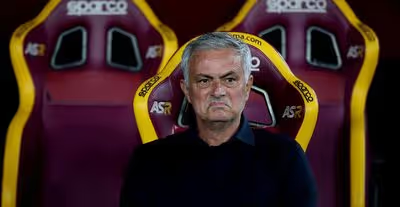
That complaint has resurfaced as Italian football faces a probe into Gianluca Rocchi, the former referee designator, renewing debate over how officials are appointed and whether behind-the-scenes influence skews outcomes.
What Mourinho actually said
Mourinho labelled Daniele Chiffi “the worst referee I have encountered in my entire career” while also arguing Roma were disadvantaged institutionally: some clubs, he suggested, could effectively reject certain referees. He admitted tempering his protests late in the match because he expected a send-off even for minor dissent, a detail that underlined his belief in uneven treatment.
Why the Rocchi investigation matters
Rocchi’s role as a designator meant he helped shape which referees took charge of Serie A fixtures. Allegations of manipulation in assignment processes strike at the core of competitive integrity: if appointments are influenced, perceived impartiality collapses and club trust in officiating erodes. There is no public evidence linking Mourinho to any wrongdoing, but his comments now read as an early warning rather than mere touchline theatre.
Immediate implications for Roma and Serie A
For Roma, Mourinho’s complaint reflects a longer-running institutional anxiety: that some clubs benefit from informal leverage. Whether true or perceived, that anxiety affects how teams approach officials and fuels public distrust. For Serie A, the investigation demands urgent clarity; opacity alone damages the league’s reputation domestically and internationally.
What this means for refereeing and governance
Scrutiny of the appointing process will likely increase calls for transparent criteria, independent oversight and clearer communication about assignments. Improving accountability would restore confidence among managers, players and fans. If governance structures don’t change, every controversial decision will be interpreted through the lens of potential manipulation, making referees easy scapegoats.
Longer-term consequences and what to watch next
Watch for institutional responses: statements from league authorities, possible procedural reforms, and tighter vetting of appointment practices. Clubs may demand greater representation or an independent audit into past assignments. For Mourinho and Roma, the episode vindicates a grievance that previously sounded like hyperbole; now it forces Italian football to confront uncomfortable structural questions.
Final assessment
Mourinho’s provocation was characteristically theatrical, but the resurfacing of his remarks amid the Rocchi probe reframes them as prescient.
Roma Have Chosen Gasperini—Now They Must Build Accordingly
Serie A faces a pivotal moment: acknowledge and fix weak governance, or accept that questions over fairness will persist and continue to overshadow on-field drama.
 Football Italia