Liverpool, Manchester City and Manchester United are using buy-back clauses as strategic safety nets, keeping a line of sight on talented exits while extracting transfer value. These options — spread across academy graduates and fringe first-teamers — reshape squad planning and market leverage, forcing clubs to weigh immediate cash against long-term control as players mature elsewhere.
Why buy-back clauses are reshaping Premier League transfers
Buy-back clauses let selling clubs protect upside on young or homegrown players while monetising development. They’re not guarantees a player will return but are insurance: lower risk, retained influence and future cost control. For elite clubs this approach balances short-term squad constraints with long-term strategic planning, especially when first-team minutes are scarce at the parent club.
Club-by-club rundown of active buy-back options
Aston Villa
Aston Villa have embraced buy-back clauses in sales, often for young, homegrown players who benefit from regular football elsewhere. Aaron Ramsey, who moved to Burnley for around £14m in August 2023, has been hampered by a major knee injury and limited to 19 appearances since. Villa’s pattern of re-signing and re-selling talents suggests they will monitor Ramsey’s recovery closely, though an immediate recall seems unlikely.
Chelsea
Chelsea’s transfer links with Strasbourg have seen low-fee moves accompanied by buy-back protections. Diego Moreira moved for about £1.7m and produced five goals and nine assists last season in France. Chelsea’s inclusion of a buy-back clause keeps options open, even if there’s no current indication they will act.
Liverpool
Liverpool routinely include buy-back clauses when moving academy or formerly homegrown players, retaining a degree of control while allowing players to seek minutes and development elsewhere.
Bobby Clark: Sold to Salzburg for roughly £10m, with a 17.5% sell-on and a buy-back option. Clark’s early Anfield promise — including a League Cup final appearance and European goals — explains Liverpool’s cautious retention of rights. A loan at Derby suggests Liverpool can wait for more seasoning before deciding.
Ben Gannon Doak: Bournemouth paid about £20m plus up to £5m in add-ons. Doak’s progress has been disrupted by injuries and expectations; the buy-back clause reflects Liverpool’s desire to avoid permanently losing a highly rated forward if he fulfils potential.
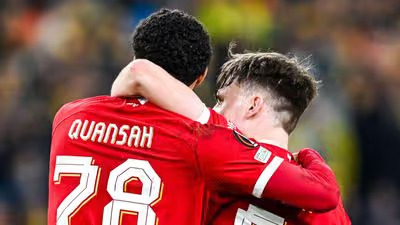
Jarell Quansah: Sold for a significant fee that reflected his pedigree, Quansah’s deal includes a structured buy-back mechanism (reported higher this summer, easing in value over time). Liverpool’s willingness to include that option signals they view him as a potential long-term centre-back asset, even if immediate re-signing is unlikely given existing centre-half options.
Manchester City
Manchester City’s academy graduates who have moved on often carry buy-back or sell-on elements — a hedge against rapid development elsewhere.
Gavin Bazunu: After joining Southampton, Bazunu has had mixed spells including loan moves and 19 clean sheets in his runs. City retained a buy-back option in case he “explodes” into elite form, but his inconsistent trajectory means immediate re-signing is not a lock.
Juan Larios: Multiple loans, including in Spain’s second tier, have limited Larios’s first-team breakthrough. City’s clause preserves choice if his development accelerates.
Sam Edozie: Six goals and six assists in 81 appearances for Southampton since the 2022 move show steady progress rather than meteoric rise; City’s option keeps the door ajar.
Jacob Wright: A young midfielder who moved to Norwich after brief senior involvement at City; the buy-back or sell-on protections ensure City benefit if he blossoms.
James McAtee: Sold for a notable fee with both sell-on and buy-back provisions, McAtee represents City’s model of allowing promising midfielders to win minutes elsewhere while keeping long-term pathways open.
Callum Doyle: A transfer that included future-focused protections, Doyle’s fee and clauses reflect City securing potential defensive depth without stalling the player’s career with limited minutes.
Manchester United
United have improved at structuring sales to protect future value, combining sell-on percentages with time-limited buy-back options.
Willy Kambwala: Moved to Villarreal for around £9.6m with a three-year buy-back option. A subsequent hamstring problem has stalled his momentum, but United will monitor his recovery given the clause’s timeframe.
Facundo Pellistri: A deal involving substantial sell-on entitlements also carried a buy-back option lasting multiple seasons. Pellistri’s move to Panathinaikos is a trial of whether regular minutes in Greece can spark a return-worthy form.
Hannibal Mejbri: Sold with a sizeable sell-on clause and a buy-back option, Mejbri’s limited first-team minutes at United make the clause a pragmatic way to retain upside should he reach the expected potential.
Mason Greenwood: The transfer to Marseille included both a buy-back option and large sell-on protections, but the club’s framing and subsequent performances make activation unlikely in the near term. United remain financially protected through the structured sell-on arrangement.
What this trend means for clubs and players
Buy-backs are a tactical compromise: selling clubs get immediate funds while keeping optionality; buying clubs pay a premium or accept caveats for talent acquisition. For players, clauses can be double-edged — offering a route back to elite setups but also creating uncertainty over long-term parentage. For buyers, clauses demand patience and a clear plan to either integrate the player immediately or accept a future decision point.
Looking ahead
Expect top Premier League clubs to continue using buy-back and sell-on combinations as standard practice for academy graduates and fringe talent. The clauses influence scouting priorities, loan strategies and how clubs balance player development against short-term needs.
Liverpool given final chance to replace Arne Slot after Fabrizio Romano’s latest update
For observers, the key is tracking who genuinely breaks through abroad — those players will be the ones who test these contractual safety nets.
 Football365