

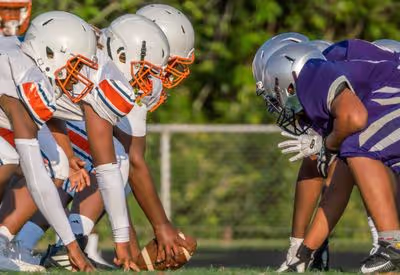
NFL games are rarely defined by team records alone. Two opponents with similar results can create completely different conditions once personnel, schemes, tempo, injuries, and previous meetings enter the equation.
Matchup analysis brings those variables together. Instead of treating every performance as transferable from one opponent to another, it examines how specific strengths interact with particular weaknesses. That perspective matters most when interpreting spreads and totals because broader statistics can obscure the individual battles likely to shape a game's direction.
Positional Battles Reveal Hidden Line Value
Overall ratings provide a starting point, but individual positional battles can produce a different picture. An offense ranked highly across several categories may still face problems when its primary strength meets an opponent specifically equipped to challenge it.
Consider an elite cornerback facing a heavily targeted receiver. Limiting that connection can force a quarterback toward secondary options, potentially changing completion rates, explosive plays, and third-down efficiency without altering the offense's underlying season-long numbers.
That level of detail matters when bettors explore NFL betting markets because headline spreads reflect the entire matchup. Examining offensive tackles against edge rushers, interior linemen against pass rushers, or tight ends against linebackers adds another layer to that broader assessment.
Positional scouting therefore helps explain where projected performance might differ from established averages. Those individual battles rarely operate independently, however. The broader offensive and defensive systems surrounding them often determine their impact.
Offensive Identity Clashes With Defensive Scheme
NFL offenses develop identities around their personnel. Some emphasize rushing volume and play-action, while others rely heavily on spread formations, quick passing, or vertical concepts. Those approaches can produce very different results against specific defensive structures.
A defense built to limit deep passes may concede shorter gains underneath, while another unit might aggressively pressure quarterbacks but leave more space behind its blitzes. Offensive strengths therefore become more or less effective depending on the structure opposing them.
These interactions can influence expectations surrounding spreads and totals during the week. A productive offense encountering an unfavorable schematic matchup may face lower projections, while another facing a defense vulnerable to its preferred approach can create different expectations.
Scheme analysis consequently provides context that basic scoring averages cannot capture. Yet tactical compatibility determines only part of the likely game environment. How quickly each offense operates also influences how many opportunities both sides receive.
Pace and Tempo Shape Total Projections
Tempo determines how quickly offenses move between plays and, eventually, how many possessions a game can produce. When two faster teams meet, additional possessions can create more opportunities for yards, points, turnovers, and scoring drives.
The calculation becomes less straightforward when styles conflict. A fast offense may want repeated possessions. A slower opponent may try to shorten drives and control possession. This can reduce the number of opportunities available throughout the
Totals reflect those competing possibilities, along with offensive and defensive efficiency. Early projections account for expected pace, but actual game script can push contests toward one team's preferred rhythm, particularly after an early lead changes play selection.
That makes tempo worth examining separately from points-per-game averages. Similar scoring records can emerge through considerably different possession structures. Personnel availability can then alter those expectations again, especially when an injury changes who controls an important positional matchup.
Injury Reports Redefine Matchup Dynamics
One missing starter can transform an otherwise favorable matchup. Losing a left tackle, cornerback, receiver, or pass rusher changes more than overall roster strength because the replacement must immediately handle responsibilities designed for another player.
Backups can also force schematic adjustments. An offense may provide additional protection for an inexperienced tackle, while a defense missing a starting corner could use more safety help. Those responses create secondary effects elsewhere on the field.
Injury information can therefore contribute to late-week movement in spreads and totals. The significance depends not simply on the absent player's reputation, but on how the replacement matches up against the specific opponent.
That distinction makes updated analysis essential. Conclusions reached early in the week may become less relevant as player availability changes. Personnel shifts reshape immediate matchups, while divisional games add another consideration: repeated exposure between familiar opponents.
Divisional Familiarity Alters Historical Matchup Trends
Division rivals meet repeatedly, creating familiarity that rarely exists between occasional opponents. Coaches study many of the same personnel and concepts across multiple seasons, while players accumulate direct experience against individual opponents and tendencies.
That history provides additional matchup evidence. Previous meetings can reveal how one offensive line handles a particular pass rush or whether a defensive structure consistently disrupts an opponent's preferred concepts.
Historical results still require context. Coaching changes, injuries, roster turnover, and evolving schemes can make older meetings less relevant. Familiarity can also encourage tactical changes, as both sides understand what worked previously.
Divisional analysis therefore requires balancing repeated evidence against current conditions. Previous meetings can strengthen a projection when personnel and systems remain comparable, but they should not override present information. Situational factors provide the final layer needed to connect those different matchup signals.
Situational Context Completes the Matchup Picture
Individual matchups become more useful when placed within the circumstances surrounding a game. Scheme, tempo, injuries, and divisional history establish important foundations, but they do not account for every condition affecting how teams approach Sunday.
Travel can shorten preparation routines, while rest advantages may influence physical readiness. Short weeks create different demands from games following a bye, and late-season contests can carry implications that affect tactical decisions and player usage.
Combining those circumstances with on-field analysis creates a fuller picture. A favorable positional matchup may become less influential if injuries force adjustments elsewhere, just as a tempo advantage can disappear when game script changes unexpectedly.
No single variable therefore defines matchup analysis. Positional battles establish detail, schemes explain interaction, tempo shapes opportunities, injuries alter personnel, and history adds familiarity. Situational context connects those pieces into one assessment.
Matchups Turn Statistics Into Context
NFL statistics become more informative when connected to the opponent creating the next test. Season averages describe what has happened, while matchup analysis helps explain why similar production may not carry over to another game.
That distinction matters across betting markets. Positional battles, schematic clashes, tempo, injuries, divisional familiarity, and situational circumstances each contribute different information. Evaluating them together provides a more complete interpretation of spreads and totals, replacing broad assumptions with context surrounding how two specific teams are likely to interact.


