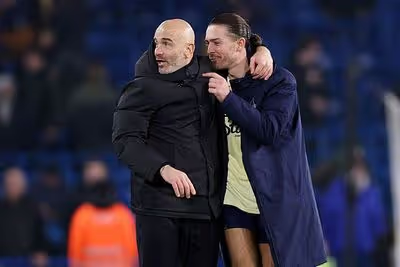
New Manchester City manager Enzo Maresca left the door open for Jack Grealish to remain at the Etihad, stressing Grealish is "a Man City player" as he recovers from a stress fracture. With Everton keen on a return and City favouring a permanent exit, Maresca’s arrival complicates transfer talk — he wants to assess and coach club players before decisions are made.
Maresca keeps Grealish option alive as transfer chatter intensifies
Enzo Maresca, freshly promoted to Manchester City’s managerial role, refused to rule out Jack Grealish staying at the club despite renewed interest from Everton. The Italian was clear: Grealish is currently a Manchester City player and under his remit, and Maresca stressed his responsibility to work with players who belong to the club.
Where Grealish stands: injury and recovery
The 30-year-old playmaker spent last season on loan at Everton, where he delivered decisive contributions before a stress fracture in his foot ended his campaign early. Grealish has since returned to City for rehabilitation and is progressing toward full training with medical staff at the Etihad.
Everton interest versus City’s preference
Everton want the attacker back, and there appears to be appetite on the player’s side for a reunion. Manchester City, however, are said to prefer a permanent transfer rather than another loan, a stance that would shape negotiations and Everton’s recruitment strategy this summer.
Why Maresca’s comments matter
Maresca’s insistence on assessing players who “belong to the club” signals a pragmatic approach: evaluate fitness and form before sanctioning moves. That matters because Grealish’s availability hinges on his recovery, and Maresca — who worked under Pep Guardiola — may have different tactical priorities that influence whether Grealish fits into his plans.
Footballing and tactical implications
Grealish offers creativity and width, but has had an inconsistent spell at City. Under Maresca, the question becomes whether his style will be valued enough to justify keeping a high-profile, expensive squad member returning from injury. If Maresca prioritises a different balance of midfielders and forwards, City might accelerate a sale; if he sees tactical utility in Grealish’s dribbling and link play, the player could earn a renewed role.
What could happen next
First priority is Grealish’s return to full training and match fitness. Once that benchmark is met, City and Everton will face a clearer decision point: loan, permanent sale, or retention. Maresca’s involvement adds a fresh variable — his evaluation could either revive Grealish’s prospects at the Etihad or speed up talks for a move elsewhere.
For Everton and Grealish: practical considerations
Everton must weigh the financial model of a permanent transfer against immediate squad needs; Grealish’s injury history and City’s asking price will be key factors. For the player, staying and winning back a role under a new manager offers both risk and reward: a clean slate under Maresca could restore value, but competition for minutes will be fierce.
Bottom line
Maresca’s measured public stance buys City time and puts the onus on fitness and fit. This summer’s outcome will hinge less on headlines and more on medical returns, tactical assessments, and whether City prefer to offload a high-value asset permanently.
Real Madrid pursue Rodri as pragmatic midfield priority amid Man City contract uncertainty
For Grealish, the next few weeks are decisive — recovery, training performances and Maresca’s appraisal will determine his Manchester City future.
 Liverpool Echo