YouTube and the NFL have entered a long-form contract review for a five-game standalone 2026 package, effectively positioning YouTube as the frontrunner to acquire premium holiday and international matchups. The move would shift marquee NFL content toward streaming, raise fresh questions about the Sports Broadcasting Act’s relevance, and reshape how fans and broadcasters access key Week 1, Thanksgiving, Black Friday and Christmas Eve games.
YouTube moving toward a five-game NFL package for 2026
YouTube and the NFL are negotiating detailed contract language after reaching agreement on major terms for a five-game 2026 slate. That long-form review is the penultimate step before signatures and public confirmation, signaling YouTube as the likely home for a chunk of the league’s high-profile standalone games.
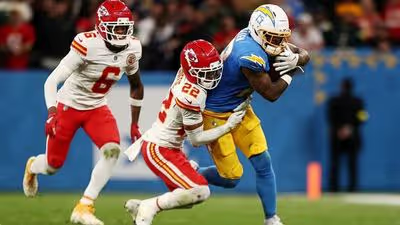
Which games are on the table?
Options reportedly included marquee holiday and international slots: a Week 1 international game (widely believed to be 49ers-Rams in Australia), a Thanksgiving Eve window, a second Black Friday contest, and a Christmas Eve broadcast. The final selection hasn’t been disclosed, but the menu points to games that carry strong promotional and global-value potential.
Why this matters: streaming vs. traditional broadcast
Putting games once destined for Fox or another linear network onto YouTube signals a continuing pivot in how the NFL distributes premium inventory. For fans, free or widely accessible streams on YouTube can broaden global reach and remove local blackout friction. For networks, it chips away at exclusive appointment viewing and forces rights-holders to rethink bundling, promos and cross-platform integration.
Viewership and expectations
Previous NFL experiments on YouTube drew sizable global audiences but also fell short of some lofty expectations. Even a free stream that delivered millions of viewers underlined two realities: streaming can extend reach, yet it doesn’t automatically replicate the appointment-viewing dominance of network TV. The commercial calculus for advertisers and the league depends less on raw reach and more on engagement, demographics and monetization.
Legal stakes: the Sports Broadcasting Act and antitrust scrutiny
The deal revives legal questions about whether the Sports Broadcasting Act of 1961 — written around three-letter, FCC-regulated broadcast networks — shields the NFL’s coordinated rights sales to new streaming platforms. Making games available on YouTube, especially at no charge, may blunt certain antitrust arguments in practice, but it doesn’t erase the underlying legal debate: does the league’s cooperative rights model extend to platform partners that aren’t traditional broadcasters?
What this could prompt
Expect renewed scrutiny from competitors, consumer advocates and possibly regulators. The league’s choice to reassign marquee slots to a global streaming platform could spur legal challenges or legislative interest, particularly if traditional broadcasters argue the shift harms competition or audience access domestically.
What comes next
Long-form contract review typically precedes final execution and then a public announcement. The immediate next steps: finalize contract language, designate which five games YouTube will carry, and integrate those games into the 2026 schedule. For fans and media partners, the practical timeline is straightforward; for lawyers and rights negotiators, the implications will be dissected for months.
Why this is significant long-term
If completed, the deal would be another landmark in the NFL’s steady migration of marquee inventory to streaming platforms. That migration reshapes rights valuations, challenges legacy broadcast models and tests the legal frameworks that have governed sports distribution for decades.
Julian Edelman Sends Blunt A.J. Brown Message As Rumors Continue To Swirl
For the NFL, it’s a balancing act: maximize global reach and innovation while managing relationships with traditional partners and legal exposure.
 Nbc Sports