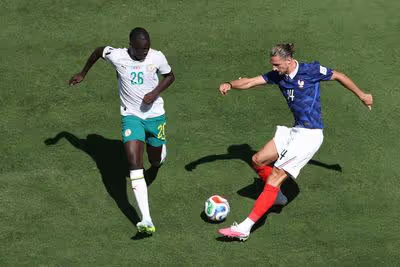
Adrien Rabiot publicly criticized the playing surface at MetLife Stadium after France’s 3-1 World Cup opener, joining players and coaches who say the temporary natural grass over artificial turf is hard, short and disruptive. With FIFA-mandated temporary pitches in place for 2026 venues, mounting complaints at a major tournament raise real questions about ball roll, tactics and player safety at MetLife.
Rabiot slams MetLife pitch after France’s opening win
Adrien Rabiot said the pitch “felt more like an artificial surface—quite hard and quite rigid,” after France’s 3-1 win over Senegal in the World Cup opener. “The pitch ... I don’t even know if you can call it that,” he added, making his dissatisfaction explicit despite the result.

Players and coaches echo the same concerns
Deschamps: ‘special surface’
France manager Didier Deschamps called it a “special surface,” pointing to very short grass fibers and a hard layer beneath — a description that underlines why midfield tempo and passing patterns can suffer.
Vinicius: rhythm disrupted
Brazil forward Vinicius Junior complained the heat had dried the turf and disrupted Brazil’s style, saying the conditions made it difficult to “get into a rhythm” and to switch play from flank to flank.
Past complaints resurface
This is not new. Coaches at previous high-profile matches have criticized MetLife’s surface as unusually short and firm, likening it to a golf green and noting it differs from the playing conditions teams expect at top levels.
What the MetLife surface actually is
MetLife uses a temporary natural grass layer installed over permanent artificial turf — a configuration FIFA required for select stadiums hosting 2026 World Cup matches. That construction can produce a firmer feel and different ball behavior compared with traditional, deeper natural pitches.
FIFA checks and watering practices
FIFA protocols call for daily measurements of moisture, ball roll and firmness to keep surfaces within tournament standards. Many World Cup venues also use halftime irrigation systems to restore moisture; whether MetLife’s approach matched those best practices has come under scrutiny during the tournament.
Why these complaints matter — tactical and practical implications
When a pitch limits ball roll or feels firm underfoot, teams that rely on quick passing, patient build-up and flank switches lose a core tactical advantage. For playmakers and wingers, inconsistent bounce and slower roll force more conservative decision-making. For managers, that can mean adjusting formation or tempo mid-game — never ideal in a tournament where margins are fine.
There’s also a genuine concern about player comfort and potential injury risk when footing and surface give unpredictable feedback. The criticism isn’t mere griping; it affects match quality and how coaches prepare.
What could happen next
Grounds crews can tweak watering schedules and surface maintenance during a tournament, and FIFA can enforce corrective measures if readings fall outside permitted ranges. Expect teams to adapt tactically in the short term — more direct play, altered passing patterns — while the debate over temporary grass atop turf continues to influence planning for major events.
Portugal's World Cup opener raises tactical doubts as Ronaldo struggles in 1-1 draw
If complaints persist, the conversation will shift from isolated match frustration to broader scrutiny of what hosts and governing bodies consider acceptable playing conditions for elite international football.
 New York Post