What was said, and the immediate fallout
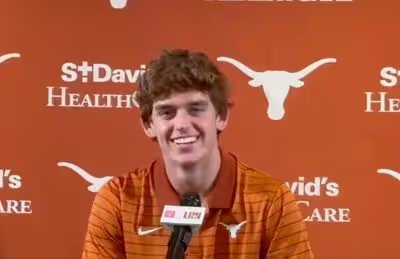
Arch Manning drew sharp criticism after laughing while saying he had seen an AI-generated clip of Steve Sarkisian slapping Holly Rowe. The exchange occurred when he was asked whether he had seen any social-media edits following Texas’ comeback against Ohio State; Manning said he had seen "a few" videos and referenced AI edits of Sarkisian’s postgame interview, prompting audible laughter in the room.
The reaction to that laughter was swift. The comments drew backlash on social media late Monday into Tuesday, placing Manning — identified in coverage as a potential No. 1 pick in the 2027 NFL Draft — at the center of a high-profile controversy.
The sequence of events that preceded Manning’s remark added context: Sarkisian’s decision to move past an attempted postgame interview with Rowe generated mixed reactions, and the existence of AI edits amplifying that moment has unsettled many observers.
Voices pushing back: humor, awareness and domestic violence
The criticism was explicit and personal. Tricia Whitaker wrote on X that "A woman being hit isn’t a punchline," and described joking about the AI video and the room’s laughter as "sickening" and "shame on you." Her comments framed the incident not simply as an ill-judged attempt at humor but as part of a wider concern about normalizing images of violence against women.
Other voices on social platforms echoed that sentiment, calling out the apparent lack of awareness shown when teammates or media members laughed at the mention of a violent AI edit. Stacey Dales also chimed in on the conversation, reinforcing the view that the reaction was troubling for those who follow or cover the sport.
Critics have emphasized two intertwined issues: the ethical stakes of reworking real people into fabricated violent scenes and the cultural context in which those fabrications are sometimes treated as jokes. For survivors of domestic violence, whether the image is manufactured or real can matter little; the imagery itself can re-traumatize and perpetuate harmful attitudes.
Journalistic responsibility and the apology from the reporter who shared the clip
The social-media clip that circulated began with a tweet from Evan Vieth capturing Manning’s response. Vieth later issued a lengthy apology, acknowledging he had captioned the video with the word "gold" and saying he was "far too hasty in publishing the video without further context and with an inappropriate caption." In his apology he wrote that captioning Manning’s response that way “trivialized an AI video depicting violence against a colleague, and that is a mistake I deeply regret.”
Vieth said he had asked whether Manning had seen any edits on TikTok or Twitter after the game and that he recognized quickly the harm his presentation had caused. The apology directly addressed the decision to amplify the clip with a flippant caption and sought to reclaim responsibility for that editorial choice.
As of Tuesday morning, Sporting News reported that Manning and Texas had not issued a public response to the controversy. That absence has left the narrative shaped primarily by social-media reaction, commentary from other media figures and the apology from the journalist who posted the clip.
Where the debate sits now
The episode sits at the intersection of several modern tensions in sports coverage: rapidly produced AI content, the reflex to treat sensational edits as fodder for laughs, and the ethical obligations of both athletes and journalists when those edits depict harm to real people. For many observers, the incident highlights how quickly a tossed-off laugh can be read as endorsement of material that normalizes violence.
Others have focused on the role of the person who amplified the clip, arguing the dynamics of social-media virality mean responsibility extends beyond the person in the room to anyone who posts and frames the moment for mass consumption. Vieth’s apology acknowledged that responsibility; critics say the episode is also a reminder that quick hits of content often lack necessary context and can escalate harm before anyone has considered the consequences.
What remains certain from the reporting: Manning said he had seen "a few" AI edits; laughter in the press room followed his comment; the reaction drew sustained public backlash; the original poster apologized; and at the time of the apology there was no public response from Manning or Texas. Beyond those facts, the episode continues to prompt conversation about how humor, media representation and technology intersect with the depiction of violence in sport.