Balanced attack and clutch plays set the tone

The Arizona Cardinals opened their season with a 26-14 victory over the Los Angeles Chargers, a game defined less by a single superstar and more by a string of complementary performances across offense, defense and special teams.
Arizona’s offense got steady production from its receiving corps and tight end room, while the defense rotated bodies up front and made late-game plays that swung momentum. Special teams also factored into field-position battles, helping the Cardinals control a game they never surrendered after the first half.
Reliable receiving and a workmanlike performance at tight end
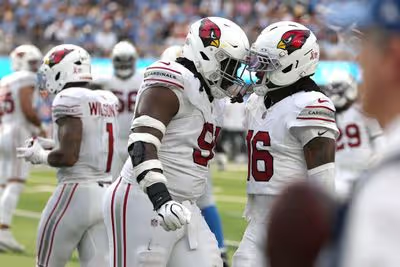
Kendrick Bourne came up with a first‑down catch in the first half and provided a reliable target that helped sustain the Cardinals' passing attack.
Trey McBride paced the unit with nine receptions for 95 yards and a touchdown, giving Arizona a steady security blanket in short-to-intermediate passing situations. Together, Bourne’s efficiency and McBride’s volume turned several Chargers’ defensive stops into extended possessions for the Cardinals.
Defensive rotation produces timely disruption
Arizona’s defensive line operated as a collective unit with heavy rotation, a group effort that helped keep the Chargers' rushing attack in check.
The defense made key plays late in the first half, with multiple defenders contributing to the team's effort.
The Cardinals rotated defensive linemen throughout the game, with multiple players seeing snaps as part of the defensive front.
Linebacker play and depth wins the day
The Cardinals' linebacker corps anchored the defense with physical, disciplined tackling; Mack Wilson Sr. totaled six tackles and a pass defensed.
Arizona’s second-level contributions didn’t stop there; other linebackers provided consistent pressures and run support, and rotational pieces made the most of limited snaps.
Depth and special teams underpin the victory
Depth counted in every phase: 20 players logged at least one defensive snap out of 55, and 34 players participated on special teams. That breadth allowed the Cardinals to keep fresh defenders on the field and sustain tempo against a Chargers unit that tried to force the issue.
Special teams helped tilt field position in Arizona’s favor at multiple points, and the front seven’s collective work limited explosive plays while creating opportunities for short fields. The Cardinals’ defensive line rotation and complementary linebacker play foiled attempts to convert third downs on crucial series.
How the win came together
What stood out in Week 1 was not a single highlight-reel star carrying the team but a steady procession of reliable plays from players who often fly under the radar. Bourne’s catch-to-first-down conversion rate and McBride’s scoring catch kept drives alive; a rotating defensive front produced a go-ahead stop when it mattered most; and a combination of linebackers and edge defenders turned small advantages into sustained control.
When the final whistle blew, Arizona had done what balanced teams must: manufacture drives, win the field-position game and make the key defensive play to preserve a lead. The result was a 1-0 start highlighted by contributions from players who might not make every headline but who did precisely what was necessary to win.