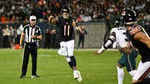
The Chicago Bears leaned on strategic adjustments and veteran experience to pull off a surprise road victory over the Philadelphia Eagles on Monday night, relying on a ground-focused finish and steady leadership under center after being forced into a depth move at quarterback.
Quarterback shuffle and a veteran presence

With Caleb Williams sidelined by a hamstring injury and Tyson Bagent unavailable as he worked through the concussion protocol, the Bears turned to Case Keenum to start Monday night’s game. It was Keenum’s first appearance since 2023 and his 67th career start; the outing extended a rare career milestone, joining Ryan Fitzpatrick as one of the only quarterbacks to win starts for seven different NFL teams.
Chicago’s use of a veteran signal-caller in that spot reshaped the game plan. After early phases that required in-game adjustments, the Bears found ways to keep the offense moving and control critical moments late in the contest.
Adjustments, run game and situational control
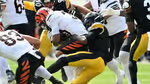
Chicago’s coaching staff made visible tactical changes as the game progressed. The Bears were credited with finding “other ways to achieve their ends,” shifting the balance of play-calling and leaning more heavily on the run as the fourth quarter unfolded — a sequence that allowed them to dictate tempo and shorten the game.
That late emphasis on the running game paid dividends in the most important phase of the matchup. By prioritizing sustained drives and clock management in the final quarter, the Bears limited the Eagles’ opportunities and forced Philadelphia to play against a clock and field-position plan that no longer favored a comeback.
“I thought the results of tonight were a reflection of the preparation that they put in and the hard work they put in throughout the week,” Johnson said, highlighting the team’s weeklong emphasis on execution and situational readiness.
Contributions beyond the box score
Beyond the quarterback change and schematic tweaks, the victory featured contributions from multiple facets of the roster. The Bears’ ability to diversify their attack and sustain drives in crunch time emerged as a clear differentiator, while defensive stands and special teams positioning helped flip momentum at key junctures.
Chicago’s approach combined the kind of short-yardage, clock-consuming drives that frustrate opponents with timely plays that extended possessions. Those sequences blunted Philadelphia’s attempts to establish rhythm and placed additional pressure on the Eagles to force quick, high-risk plays.
A statement of preparation
The win underscored a broader theme: preparation. Players and coaches alike emphasized that the result was the product of a detailed weekly plan executed under unexpected circumstances at the quarterback position. The Bears’ midgame adaptations and fourth-quarter game-management choices reflected a staff willing to lean into strengths and protect a lead once it was established.
For the Eagles, the game was a reminder of how matchups can swing when an opponent dictates pace late and forces errant timing. For the Bears, it was a night in which strategic discipline — from personnel decisions to play-selection down the stretch — produced a road victory that hinged on execution in the final quarter.
Case Keenum’s veteran presence provided stability when Chicago needed it, and the team’s tactical pivot toward the run in the closing period allowed the Bears to control the final minutes. Those elements combined to deliver a decisive result that reflected both planning and in-game adaptability.