Pressure and turnovers decided a low-scoring affair
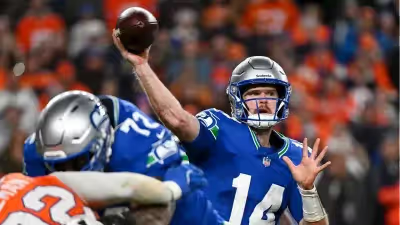
The Broncos leaned on their defense to grind out a 17-14 overtime victory over the Seahawks, turning pressure and takeaways into the difference in a tight game. Denver recorded five sacks, harassing Sam Darnold throughout the night and registering 17 hits on the quarterback, while forcing three turnovers that ultimately swung momentum in their favor.
Those sacks and hits kept Seattle from finding sustained rhythm. After managing just three points across their first eight possessions, the Seahawks finally mounted an 11-play, 67-yard drive late in the fourth quarter that culminated in a one-yard touchdown run by George Holani and a two-point conversion to Rashid Shaheed that pulled Seattle within reach. But Denver’s ability to create disruption — especially when it mattered most — set the stage for the late-game sequence that decided the contest.
Secondary steps up despite depleted lineup
Denver entered the game shorthanded in the back end but still managed to smother Seattle’s attack for the majority of the night. The Broncos were without star Patrick Surtain II and Talanoa Hufanga, both sidelined with ankle injuries, and Riley Moss was described as in and out of the lineup leading up to kickoff. Even with those absences, Denver’s short-handed secondary held Seattle to 14 points over four and a half quarters of football.
Individual plays in the secondary proved decisive. Kris Abrams-Draine intercepted a pass at the Denver 30 with 1:25 left in regulation, a turnover that looked to seal the game before Seattle engineered a game-tying field goal. Later, Ja’Quan McMillian picked off Darnold in overtime at the Denver 43; that interception immediately set up Wil Lutz’s 53-yard field goal to close the game. Those two grabs, coming from a unit coping with injuries, underscored a next-man-up mentality that carried Denver through the evening.
Late sequence, special teams and the cost of a short clock
The close finish hinged on a flurry of late-game events. With 3 seconds left in regulation, Jason Myers drilled a 34-yard field goal to tie the score at 14 after a 31-yard punt return by Shaheed had given Seattle a short field to start the drive. Denver’s offense then appeared to have the advantage after Abrams-Draine’s fourth-quarter interception, but the Broncos burned just 15 seconds of the remaining clock before electing to punt — a decision that allowed Seattle one last opportunity to force overtime.
Overtime opened with Denver getting the ball first, but possession quickly swung when McMillian intercepted Darnold. The turnover set up Lutz’s long field goal, ending the night. Special-teams plays — the crucial punt return that ignited Seattle’s tying drive and the successful late and overtime placekicks — played a clear supporting role in the outcome.
Injuries on both sides altered the chess match
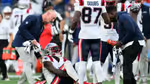
Health issues shaped the flow and personnel decisions for both teams. Denver’s absences on defense were well-documented before kickoff, but the group’s ability to limit big plays and force turnovers masked how thin the depth chart was. Seattle suffered an in-game blow when tight end Elijah Arroyo exited late in the first half with an apparent right shoulder injury sustained while diving for a fumble. That loss removed a target from the Seahawks’ red-zone and intermediate passing game during a stretch when they needed every weapon to climb back into the contest.
The Broncos’ injury log included the two ankle ailments that kept key contributors off the field and the sporadic availability of another defender, yet the unit produced a performance that compensated for the offensive inconsistencies Denver showed early in the night. That defensive resilience allowed the Broncos to emerge from a rough six-week stretch with a 4-2 record.
What the night revealed about each defense
For Denver, Thursday’s game emphasized the front-to-back identity that can carry a team when the offense sputters. Getting consistent pressure — five sacks and repeated hits on Darnold — and converting those pressures into turnovers created a manageable plan even with personnel losses in the secondary. The interceptions late in the game, in particular, were timely and game-altering.
Seattle’s defense did enough in stretches to keep the game within reach but struggled to completely shut down Denver’s drives early. The Seahawks’ offense overcame an early scoring drought to rally in the fourth quarter, but their unit could not prevent the Broncos’ late takeaways. The loss also added to Seattle’s turnovers tally for the night and matched the team’s loss total from last season, leaving the Seahawks with questions about consistency at critical moments.
In a game defined by defense and attrition, Denver’s ability to force five sacks and three turnovers while holding a high-scoring opponent to 14 points over most of the contest proved decisive. The Broncos left with the win and a record reflecting a team that, for now, can rely on its defense to mask offensive volatility and roster absences.