From season-ending break to the practice field
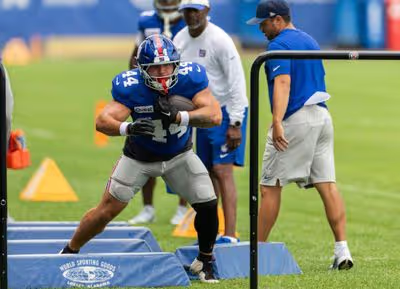
Cam Skattebo is back on the field for the New York Giants after a lengthy rehabilitation following a gruesome leg injury that ended his rookie campaign.
The injury occurred in Week 8 against the Philadelphia Eagles and left Skattebo with a dislocated right ankle and an open fracture of the right tibia. He missed the remainder of the season while he recovered; the club now lists him as rehabilitated and available after completing that process.
Skattebo has described the rehabilitation as a formative experience, saying the time away helped him find “who he was as a player and as a person.” That return to play — and the work behind it — is the reason he’s re-entering a crowded Giants backfield this season.
“I definitely thought about walking away” — the decision to keep going
On the show Up & Adams, Skattebo admitted that retirement crossed his mind during the early weeks of recovery. Theathleticuk reported that the second-year back told host Kay Adams he “definitely” considered walking away from football as he rehabbing the injury.
Skattebo said he had told himself coming into the NFL that a major injury would be a line he wouldn’t cross — a standard he believed he might have to honor when the ankle injury happened just seven games into his rookie year. That internal rule and the reality of a severe leg injury combined to make the first month after the incident particularly difficult.
Despite those doubts, Skattebo ultimately elected to return. The decision came after the long rehabilitation process and, by his account, a period of reflection about his identity on and off the field.
Role with the Giants and the work behind the comeback
Skattebo enters the season listed as the Giants’ top running back on the depth chart, though he will share touches in a multi-headed backfield that includes Tyrone Tracy Jr., Najee Harris and Devin Singletary. The coaching staff’s plans are likely to balance Skattebo’s workload as he continues to regain full game shape.
His roster standing reflects what he produced in a short rookie season: 101 carries for 410 yards and five touchdowns, plus 24 receptions for 207 yards and two receiving scores. Those numbers helped establish Skattebo as a promising young option in New York’s backfield before the injury halted his progress.
The rehabilitation that followed was extensive. Medical clearance and daily work with the team’s training staff brought him back to on-field activity, and the Giants now list him as rehabilitated. Skattebo’s public remarks about the process emphasize the physical grind and the introspective side of recovery, an element he credits with shaping his return.
Where the story stands
Skattebo’s admission that he briefly contemplated retirement underscores how destabilizing severe injuries can be for young players. Yet his return — medically cleared and positioned atop the depth chart — is a clear, tangible step in the opposite direction.
The Giants will manage his snaps carefully in a crowded backfield, but Skattebo’s presence alone changes the team’s rotation dynamics. If he can build on the efficiency and playmaking he showed as a rookie while staying healthy, the decision to continue his career following a near-breaking point will be judged a successful one.
For now, Skattebo’s story is one of recovery and choice: a player who faced a career-defining moment, doubted his future, committed to rehabilitation and returned to rejoin his team. The next measure of that comeback will come when he translates practice availability into consistent production on game days.