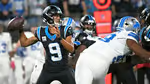
In a startling opening sequence at Lumen Field, Justin Herbert and Sam Darnold each threw an interception on their teams' very first plays, producing an unprecedented start to the game and forcing an immediate reset of momentum for both quarterbacks.
How the sequence made NFL history

The exchanges on the game's first two plays were not merely costly turnovers — they were historic. For the first time in the NFL's 100-year record, both starting quarterbacks threw interceptions on their team's first play of the game. The consecutive early picks also marked the first time a game began with back-to-back interceptions since at least 1978, according to ESPN's review of historical game starts.
Those two plays effectively canceled each other out; the interceptions offset one another and allowed the contest to restart with the same basic tactical position as at kickoff. Still, the rarity of the sequence made the opening minutes an outlier statistically and created an unusual script for how both signal-callers and their offenses would have to proceed.
Immediate effects on the game's flow and early strategy
An interception on a team's opening play is a jarring event for any offense, and it is especially notable when both starters do it in succession. The twin turnovers erased an opening-possession advantage for either side and placed both clubs in a reset scenario where early-game momentum was ambiguous rather than tilted toward one team.
Because the two turnovers occurred so quickly and against one another, neither side benefitted long-term field-positionally from the other's mistake in the opening sequence — a point observers noted as the game essentially starting over. That unusual balancing act limited an immediate strategic swing but amplified the scrutiny on each quarterback's decision-making on early-down throws.
For Justin Herbert — who runs the offense for the Los Angeles Chargers — the interception on the first play compounded the spotlight on the opening-drive plan and execution. For Sam Darnold, throwing an early pick placed similar pressure on his follow-up possessions. In both cases the turnovers forced their respective offenses into a short-term damage-control mode while the coaching staffs and play-callers adjusted to the abrupt reset.
Why the sequence matters beyond a single stat line
Few openings carry the same historical weight. The twin interceptions are rare enough to be catalogued as a statistical anomaly, yet practical in-game consequences were more immediate than historical notation: play-calling, tempo and risk tolerance all get reframed after an opening turnover, regardless of whether the opposing team profited directly from it.
This particular pairing of early picks did something unusual — it removed the usual narrative that a single interception produces a momentum edge. Instead, both teams were asked to respond after an opening mistake without the normal situational advantage granted to the team that recovers a turnover. That reshape of the opening narrative altered how coaches and quarterbacks approached subsequent series in real time.
The sequence also will live in the record books for its rarity. Both throws on their teams' first plays placed the contest into league history, underscoring how even small stretches of a game can produce outsized statistical meaning when rare events line up.
Ultimately, the opening interceptions in this matchup did more than produce a headline; they rewired the first quarter's strategic landscape by canceling a typical turnover benefit and forcing immediate adjustments from both quarterbacks and their staffs. How each signal-caller responded across the remainder of the game determined whether the early anomaly became a footnote or a decisive turning point.