The play that reignited debate: Kahlil Benson’s grab
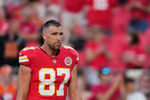
A replay clip from the game that the NFL shared on its social account highlighted a play many fans and analysts called a clear missed flag: rookie left tackle Kahlil Benson appearing to grab running back Emmett Johnson and pull him forward for extra yards. The league’s decision to post the clip — then follow it with a handshake emoji on X — drew an immediate reaction from Jason Kelce, who replied, “The NFL posting a clear and obvious penalty, and then giving the handshake emoji is pretty hilarious.”
That sequence crystallized why the play drew added attention. The specific type of infraction Benson appeared to commit reportedly has not drawn a flag since a 1991 Chiefs playoff game, a historical wrinkle that amplified frustration among critics who said the call should have been made on the field.
Other contested spots on the field and broadcast scrutiny
The Benson non-call wasn’t isolated. Several other plays at Arrowhead Stadium sparked debate during the Chiefs’ 31-10 win over the Denver Broncos, including holding that was argued on touchdown runs involving Travis Kelce and Patrick Mahomes. Those moments prompted discussion among commentators and viewers about whether whistles should have stopped the plays before the goal line.
Denver’s Pat Bryant also drew a holding flag that drew attention during the telecast; Peyton Manning questioned that call on the ManningCast, comparing it to the play at the center of Kelce’s complaint. While none of the disputed calls changed the final score, the collection of moments left officials facing more scrutiny than typical for a 21-point game.
Player reactions, accountability and the Broncos’ response
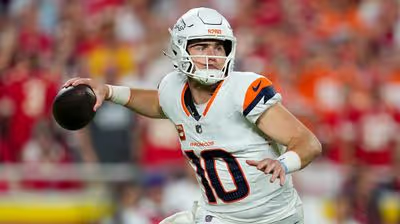
Inside the Denver locker room, quarterback Bo Nix was blunt about his team’s performance and its role in the loss. “We had way too many penalties, way too many negative plays, turnovers, putting our defense in bad spots,” Nix said. “When you give a good team a lot of chances, short fields and long yardage situations on third downs, a good team like that is going to exploit it.”
Nix added that the offense “just didn’t play very good,” and said he was taking accountability for the performance while expecting teammates to do the same. Those remarks framed part of Denver’s narrative: despite the officiating conversation, self-inflicted errors — penalties and turnovers — were central to the outcome.
What this means for perceptions of integrity
Jason Kelce’s public jab at the league’s social post and the stream of disputed calls combined to make officiating a story alongside the on-field action. Yahoo! News described the officiating as “a storyline of its own” that will likely follow the crew into next week’s assignments, a line that captured how the controversy moved beyond isolated replay debate into questions about consistency and enforcement.
For viewers and participants, optics matter. The NFL amplifying a clip of a play that many felt should have been penalized — and doing so without acknowledging the missed call — created a contrast that players and commentators seized on. While the missed call on Benson did not change how the game played out, it provided an easy target for criticism on a night highlighted by the playmaking on the field, including a long play by Travis Kelce that produced three receptions for 71 yards and a 59-yard catch-and-run.
Officials’ accountability and lingering narratives
League and officiating transparency have long been touchpoints after high-profile errors, and this game added fresh examples for that conversation. The cluster of disputed moments — from Benson’s apparent grab to debated holds on scoring plays — ensured that the crew’s work would receive additional scrutiny in the days following the game.
Even as the Chiefs celebrated a decisive win and the Broncos sought answers internally, the episode underscored a broader reality in the NFL: a handful of high-visibility decisions, or non-decisions, can shape the narrative around a contest almost as much as the final score. Players’ public reactions, and the league’s own social engagement with game footage, have combined to make officiating consistency and the perception of integrity central topics in the aftermath of Week 1.