As fantasy managers finalize their 2026 draft plans, rankings and models are reinforcing familiar themes: elite quarterbacks who can run remain transcendent scorers, running-game efficiency is a premium asset, and format-specific tweaks (PPR vs. standard) should shape early-round priorities.
Quarterback landscape: rushing upside still a premium
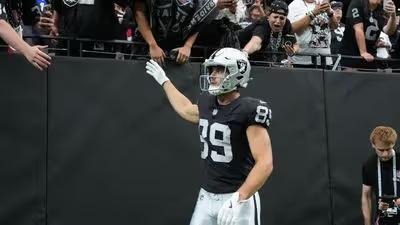
At the top of most models sits a familiar name: Josh Allen. Last season, Allen posted 3,668 passing yards and 25 passing touchdowns — his lowest totals in those categories across the past six years — yet he still finished as the No. 1 fantasy quarterback. What separates him from pure pocket passers is production on the ground: 41 rushing touchdowns over the last three seasons (the second-most in the league regardless of position) and at least 500 rushing yards in seven of eight NFL seasons. Those dual-threat numbers explain why models continue to prioritize him as a first-tier fantasy asset.
Lamar Jackson’s 2025 numbers flagged as a down year after injury and attrition, but his explosiveness remains highly valued. Cbssports projects Jackson as a bounce-back candidate in fantasy drafts, noting that a new offensive coordinator (Declan Doyle) could unlock a higher ceiling.
Models also separate value and ADP. Dak Prescott, for example, is placed ahead of several quarterbacks who are commonly drafted earlier; the model favors Prescott’s supporting cast — highlighted by a top receiver duo — as a reason he could be a middle-round steal in many formats.
Running game realities: efficiency and pass-catching matter
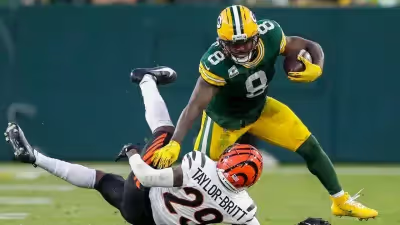
Running back production continues to drive early-round decisions. Bijan Robinson’s 2025 season is a case study in efficiency gains: despite essentially the same workload as the year prior, he produced an additional 411 scrimmage yards. He finished with 1,478 rushing yards (fourth in the league) and led peers in receptions (79) and receiving yards (820). Those mixed-yardage totals make him a high-floor fantasy asset in PPR formats.
Cbssports also noted — as a reported rumor — that Robinson reportedly received a significant contract extension during camp; that claim should be treated as unconfirmed at this time.
Jahmyr Gibbs offers another blueprint for fantasy relevance. In the six career games he’s played without David Montgomery, Gibbs averaged 152.3 scrimmage yards and totaled 10 touchdowns. Over each of the last two seasons he has produced at least 1,800 scrimmage yards and 18 total touchdowns, even with limited touches at times. Those per-touch efficiency markers push Gibbs into early-round consideration for managers who prioritize explosive weekly ceilings.
Format-driven strategy: PPR vs. standard
How you draft should hinge on scoring format. In PPR setups, elite wide receivers often migrate into the top 100 overall picks, compressing early-round value at other positions. Sporting News’ cheat-sheet guidance emphasizes a Top 300 overall list and ranks every projected starter’s fantasy impact — a useful starting point for managers building positional tiers instead of rigid ADP chasing.
Conversely, standard (non-PPR) formats increase the relative scarcity value of pure rushing opportunities. That dynamic keeps running backs highly prized in the first rounds, especially those with high-volume rushing workloads or clear touchdown upside. One ranking outlet argued that running backs carry outsized importance in standard formats — an opinion that still informs many draft boards.
Draft tactics: tiers, handcuffs and mid-round upside
Two practical approaches rise from the combined rankings and model work:
Prioritize dual-threat quarterbacks and pass-catching backs early. A QB who converts rushing attempts into consistent fantasy points provides an anchor for weekly scoring. Likewise, backs who offer receiving volume reduce bust risk in PPR leagues.
Use tiers to force clarity. Models that produce consolidated Top 300 lists and rank every projected starter help identify natural drop-offs between players. When two or three players occupy the same tier, managers should take the best available value rather than reaching for perceived upside.
Mid-round planning should include upside picks who can break out with expanded roles. Recent seasons have shown late-round contributors and injury-driven opportunities can flip rosters, so a balanced bench with at least one high-upside back and one pass-catcher is prudent.
Injuries and draft-day hygiene
An updated injury chart compiled for draft prep highlights a concern scale managers should monitor for early-weekend picks and preseason news. For PPR leagues especially, short-term absences among pass-catchers can reshuffle the Top 100 by the time drafts conclude. Use stacked rankings and the Top 300 lists to shuffle back-up plans when late injury reports hit.
Bottom line
Fantasy success in 2026 will come from marrying positional scarcity with format awareness. Quarterbacks who add rushing upside remain premium assets; running backs who pair efficient rushing output with pass-catching chops command early attention; and flexible draft strategies — tiers, value-based selections and upside bench pieces — will separate consistent winners from those who chase last year’s marks. Use consolidated Top 300 lists and projected-starter rankings as a framework, but let format-specific dynamics and weekly injury noise guide your final picks.