Self-inflicted damage: penalties and late-game turnovers
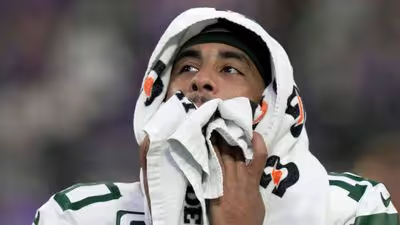
The Green Bay Packers left Minneapolis with more than a loss — they left with a list of mistakes that erased a three-quarter advantage. The Minnesota Vikings closed the game with 22 unanswered points, including three touchdowns in a span of 2 minutes, 39 seconds, turning what had been a controlled division opener into a 39-22 defeat for Green Bay.
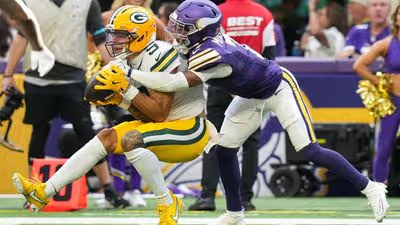
Penalties loomed large. The Packers were flagged 12 times for 98 yards; five of those infractions directly handed Minnesota first downs. The Vikings committed three penalties for 15 yards. The late-game swing was compounded by Minnesota takeaways in the fourth quarter: an interception and a fumble recovery that helped seal the comeback.
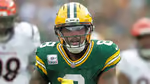
Tucker Kraft, wearing a captain’s patch for the first time, did not mince words after the game. “I think everyone just needs to realize this coaching staff, front office, they handpicked every individual that put their pads on today,” Kraft said, and he placed the fourth-quarter collapse squarely on Green Bay’s shoulders. “Yeah, it’s just a combination of mental errors and penalties,” he added, noting the team's mistakes in down-and-distance situations that repeatedly put the offense behind the sticks and handed the Vikings' defense opportunities to pounce.
Play-calling and the fourth-down gamble
Green Bay’s coaching decisions in the fourth quarter will get replayed as closely as the penalties. After the Vikings jumped offside on Trey Smack’s 40-yard field goal — a call that would have made it a 25-17 lead — coach Matt LaFleur declined the free points and sent his offense back out on fourth-and-1. He said the choice was intentional. “We’re going to be aggressive,” LaFleur said afterward. “Sometimes you live and die by that, but we’re going to be aggressive and we’re going to try to go for the throat in that situation.”
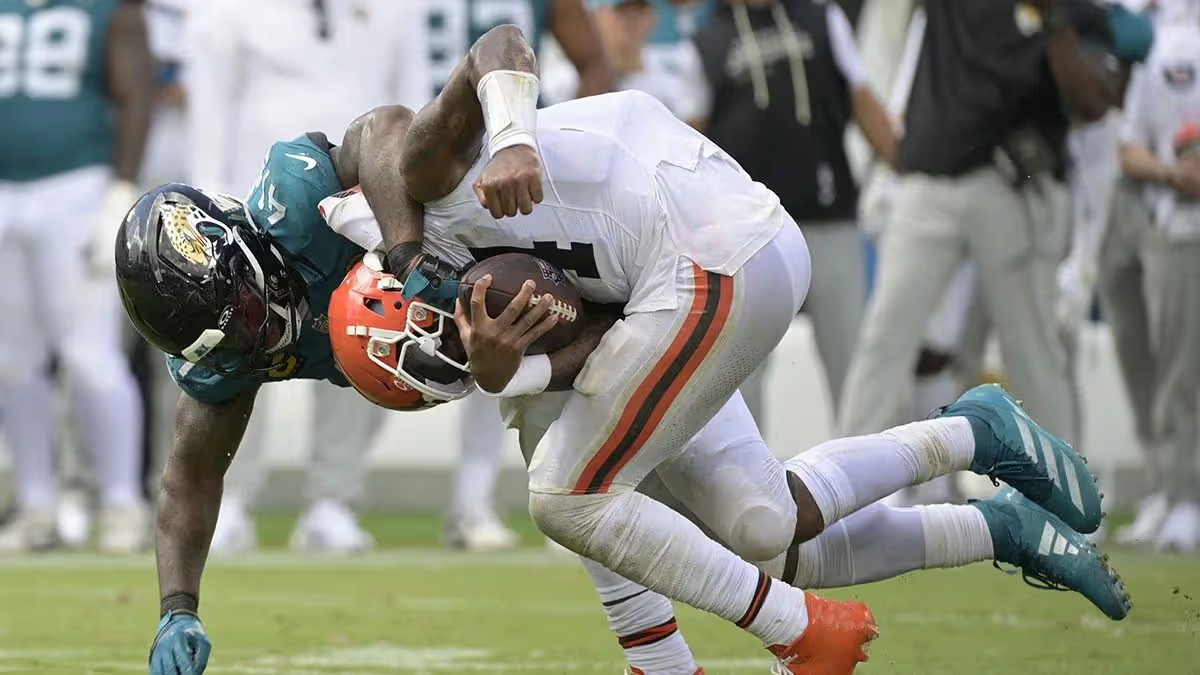
The gamble failed: Jordan Love was stuffed on the quarterback sneak, and Minnesota’s ensuing surge erased Green Bay’s cushion. LaFleur framed the decision in terms of margin. “The consideration really boiled down to try to make it a two-possession game,” he said, explaining why the staff pursued the touchdown rather than trust the defense to stifle Minnesota’s backup.
The risk-reward calculation — accept three points and force a two-score gap, or try to finish the game with a fourth-and-1 conversion — will be examined as evidence of a broader problem: the Packers can outgain opponents but still lose the key moments when discipline and situational football matter most.
Offense outgained but couldn’t close; Minnesota’s backups deliver
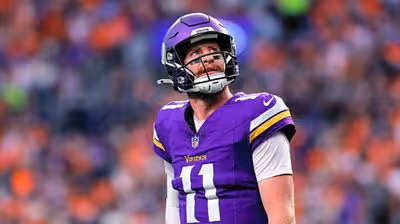
Statistically, Green Bay dominated parts of the box score, outgaining Minnesota 419-239. Yet yardage didn’t translate to points when it counted. The Vikings’ offense, reshaped midgame by a medical situation, rallied. Kyler Murray took a hit to the head on an early run and was placed in the concussion protocol; Carson Wentz entered the game thereafter and finished the afternoon completing 12 of 19 passes for 133 yards and three touchdowns.
Minnesota receiver Justin Jefferson was a central factor, finishing with eight catches for 92 yards and two scores, and the backup quarterback play culminated in the sequence that flipped the scoreboard late.
Wentz’s performance also had a financial footnote: Spotrac’s Michael Ginnitti posted on X that the victory secured Wentz a $100,000 bonus tied to playing-time and wins under the terms of his contract.
For Green Bay, the combination of penalties, situational errors and a failed fourth-down gamble overshadowed a performance that otherwise looked productive on paper. Kraft emphasized that the roster was assembled intentionally and insisted the group must meet its own standard: “Teams can’t beat us as long as we’re locked down,” he said, before noting, “That momentum swing was due to our own fault. We allowed that to happen.”
Sunday’s loss will linger as a reminder that yardage and talent only carry teams so far when missed assignments and coaching gambles determine the decisive moments. The Packers can point to the box score and to moments of execution, but the final takeaway from Minneapolis is stark: self-inflicted miscues and an aggressive fourth-down decision cost them a game they had controlled for three quarters.