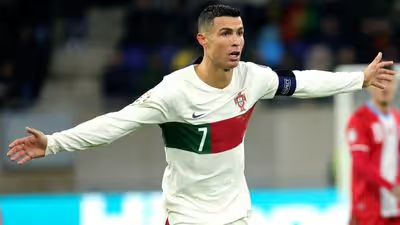
Cristiano Ronaldo has been named in Roberto Martínez’s Portugal squad for the World Cup, setting up a record sixth appearance and likely final tilt at the trophy. Martínez mixed seasoned leaders—Bruno Fernandes, Bernardo Silva—with younger creators like João Neves and Vitinha as Portugal prepares to open Group K against Congo on June 17 in Houston.
Ronaldo included as Portugal chases first World Cup
Cristiano Ronaldo’s inclusion confirms what many expected: Portugal will lean on its veteran talisman one more time. Roberto Martínez has handed Ronaldo a platform for a probable sixth World Cup appearance, a milestone that will shape team selection, tactics and media attention as the tournament approaches.

Why this selection matters
Martínez’s squad is a deliberate balance of leadership and fresh energy. Keeping Ronaldo provides a psychological edge and a proven goal threat in high-stakes moments. Yet Portugal’s real tournament prospects will hinge on how the manager integrates Ronaldo with creative midfielders and a defense capable of handling modern counterattacks.
Squad composition: experience meets youth
Goalkeepers: Diogo Costa, José Sá, Rui Silva, Ricardo Velho
Defenders: Rúben Dias, João Cancelo, Diogo Dalot, Nuno Mendes, Nélson Semedo, Matheus Nunes, Gonçalo Inácio, Renato Veiga, Tomás Araújo
Midfielders: Bruno Fernandes, Bernardo Silva, Vitinha, João Neves, Rúben Neves, Samú Costa
Forwards: Cristiano Ronaldo, Rafael Leão, João Félix, Gonçalo Ramos, Pedro Neto, Francisco Conceição, Gonçalo Guedes, Francisco Trincão
What the mix reveals
The backline features established Premier League names and domestic league standouts, signaling Martínez’s preference for a reliable defensive spine. The midfield pairing options are plentiful: Bruno Fernandes and Bernardo Silva offer creativity and tempo control, while Vitinha and João Neves bring positional discipline and younger dynamism.
Up front, Ronaldo’s presence gives Portugal a focal point, but the team will need interplay from Leão, João Félix and Ramos to unlock tight defences.
Tactical implications and likely XI questions
Martínez faces selection dilemmas: start with a Ronaldo-centric attack or prioritize mobility and pressing from the front? An XI built around Ronaldo will demand wide support and midfield runners into the box. Alternatively, a more fluid front three could preserve Ronaldo’s finishing strengths while allowing younger forwards to press and stretch opponents.
Defensive stability will be pivotal
Portugal’s ability to progress deep into the tournament rests on defensive cohesion. Rúben Dias provides leadership, but success will require full-backs and midfielders to limit transitions and protect the goalkeeper against direct attacks—especially in knockout games where margins are small.
Group K draw and the opening test
Portugal has been drawn in Group K alongside Colombia, Uzbekistan and Congo. The first match, against Congo on June 17 in Houston, serves as a window to build momentum and test attacking patterns that Martínez will want refined before tougher opponents arrive.
Why this World Cup feels different
This squad carries the weight of expectation and an urgency to seize an elusive World Cup title. Ronaldo’s global profile magnifies every result, but the team’s chances will be defined by tactical adaptability and how effectively Martínez blends experience with emerging talent.
What to watch next
How Martínez uses Ronaldo in the opening matches, the chemistry between Fernandes, Bernardo and the younger midfielders, and whether the full-backs can nullify opposition width will determine Portugal’s trajectory.
Can 'wild' Antonelli popularity save Italy's summer amid World Cup absence?
If the squad finds a coherent identity, Portugal will be a dangerous contender; if not, reliance on moments from superstars like Ronaldo could prove insufficient.
 Sportsnet