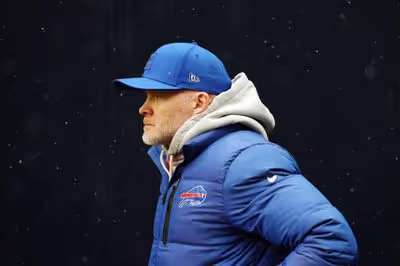
Sean McDermott, dismissed by the Buffalo Bills after nine seasons, is on a deliberate sabbatical — relocating his family to Charlotte, deepening film study, and studying leadership across sports and corporate America. He’s using the downtime to sharpen people skills and X’s-and-O’s, aiming to return next offseason as a more complete head coach ready to chase the one missing achievement: a Super Bowl title.
Sean McDermott’s sabbatical: what happened and why it matters
Sean McDermott was dismissed by the Buffalo Bills in January after nine seasons that transformed the franchise: a 98-50 record, a 17-year playoff drought ended in Year 1 and postseason appearances in eight of nine years. Rather than immediately chasing assistant roles or a quick landing spot, McDermott chose a measured reset — a professional sabbatical focused on leadership, film study and family balance. That decision is strategic, not sentimental, and signals a coach investing in long-term gains over short-term optics.

From Orchard Park to south Charlotte: a new daily routine
McDermott moved his family to south Charlotte and built a regimented, family-centered routine. Mornings now include school drop-offs, an hour in the gym and focused stretches of film and research in a makeshift home office. He still commits six to eight hours a day to football work but punctuates it with family duties, youth sports and downtime — a deliberate recalibration after 25 consecutive years tied to training camp cycles and the NFL calendar.
Why the sabbatical is more than a break
This isn’t a passive hiatus. McDermott frames the year as an 11- to 12-month growth mission: self-inventory, targeted learning and expansion of his leadership toolkit. He’s cataloguing areas of improvement — from schematic adjustments to head-coach responsibilities — and seeking perspectives outside the Bills bubble. That approach reflects a modern coaching mindset: continuous marginal gains rather than wholesale reinvention.
Learning from other sports and corporate leaders
Instead of confining his study to X’s and O’s, McDermott met with leaders across basketball, wrestling, soccer and corporate sectors. He spent time with NBA coach Mark Daigneault to study player empathy and communication, visited wrestling legend Dan Gable, observed operations at MLS’ Philadelphia Union and scheduled meetings with leadership figures tied to his alma mater. He’ll also attend a major leadership conference later this spring.
What these cross-sport lessons mean
Exposure to different coaching models is purposeful: NBA player management and development flow differently than football’s hierarchical, roster-heavy environment. McDermott is hunting for transferable methods — how to create mental space for players, foster accountability, and structure support systems that improve week-to-week performance. The takeaway is clear: tactical knowledge wins games, but people management wins seasons.
Targeted work on leadership and empathy
A recurring theme of McDermott’s offseason is sharpening the “people quotient.” He’s asking how to better serve players and staff, how to put athletes in the right mental space, and how to scale empathy without sacrificing standards. Conversations with figures like Daigneault and longtime mentors reinforced an idea often overlooked in football: emotional intelligence can be a competitive edge.
Why that matters to NFL decision-makers
Franchises evaluating head-coach candidates increasingly prize leaders who can manage complex rosters, cultivate buy-in and navigate a 24/7 media landscape. McDermott’s emphasis on empathy and staff support — coupled with his track record of culture-building in Buffalo — enhances his profile for clubs seeking more than schematic upgrades. It’s a pragmatic adaptation to how elite organizations are built today.
Mentors, peers and the value of a reset
McDermott leaned on advice from veteran coaches who took similar pauses, including voices within the league who urged reflection and targeted development. That counsel, plus earlier influences like Andy Reid’s encouragement to learn broadly, underpins McDermott’s plan: visit other programs, test new ideas, and integrate what fits his philosophy. The result should be a coach who’s tactically sharp and more nuanced in leading people.
Balancing family and career — a practical advantage
The sabbatical also buys McDermott family time that was scarce during the relentless NFL grind. That balance is not mere luxury — it’s practical. Coaches who return refreshed and more present tend to make clearer decisions and sustain the stamina required for multi-year rebuilds or high-pressure turnarounds. For a leader whose brand is process and discipline, modeling balance can strengthen credibility.
What happens next: timing and expectations
McDermott expects the strongest pull back to the game by late summer and is planning media appearances around the draft and charitable commitments this spring. Most head-coaching openings for teams looking to retool emerge in the late winter cycle; McDermott’s timeline puts him in prime position next hiring season. The larger metric won’t be how quickly he’s rehired but what version of coach he becomes when opportunities arise.
Outlook: closing the final gap
What McDermott lacks in a résumé is the ultimate prize: a Super Bowl. This sabbatical is explicitly aimed at fixing that. By blending rigorous schematic study with broader leadership development and a renewed focus on player welfare, McDermott is trying to convert sustained regular-season success into postseason triumph. It’s a smart bet — one that prioritizes readiness and fit over haste.
Bottom line
Sean McDermott’s year away is a calculated investment. He’s not hiding from scrutiny; he’s preparing to return as a more complete leader capable of closing the narrow margins that define championships.
Bills predicted to pull off blockbuster trade that gives Josh Allen elite weapon
Teams hunting for a culture-builder and proven architect of sustained contention should view his sabbatical as a signal: McDermott isn’t stepping back — he’s leveling up.
 Theathleticuk