Marie‑Louise Eta has been appointed Union Berlin’s interim head coach, becoming the first woman to lead a men’s team in one of Europe’s top five leagues — a landmark move that shifts the Bundesliga’s status quo and reignites debate about opportunity, readiness and backlash in elite coaching. Meanwhile, the U.S. women’s national team edged Japan 2-1 in a first test that showcased veteran poise and young promise ahead of two more high-profile fixtures.
Marie‑Louise Eta makes history as Union Berlin head coach
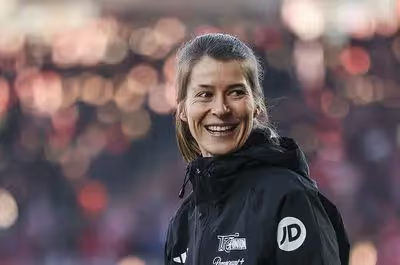
Marie‑Louise Eta has been named Union Berlin’s head coach through the end of the season, replacing Steffen Baumgart after a 3-1 defeat to Heidenheim. The 34‑year‑old’s promotion makes her the first woman to take the top role at a men’s club in one of Europe’s five biggest football leagues — a genuinely historic appointment rather than a token gesture.
From academy to first team
Eta’s rise is grounded in continuity: she’s been part of Union at multiple levels, including coaching the under‑19s and previously serving as an interim assistant during a Champions League match three years ago. The club says Eta will return to manage Union’s women’s team this summer, highlighting the short‑term, pragmatic nature of the appointment rather than a permanent overhaul.
Club backing — and ugly backlash
Union Berlin has publicly backed Eta amid sexist commentary from parts of the fanbase. The director of football publicly denounced those reactions as embarrassing, underscoring how progress at elite clubs still triggers regressive responses. This moment matters because it tests institutional commitment: will the Bundesliga treat this as an isolated headline or the start of a broader opening for women in top coaching roles?
Why it matters
Eta’s appointment is more than symbolism. It challenges long‑standing assumptions about who is “ready” to coach at the highest levels and exposes the scarcity of pathways for women into elite men’s coaching. If Union gives Eta the tools and time to succeed, it could create a blueprint; if the role is handled as a temporary publicity pivot, critics will have a field day — and the next generation of female coaches will pay the price.
USWNT 2, Japan 1 — veterans steady, youngsters sparkle
The U.S. opened a three‑match series with Japan by winning 2-1. The result was built on veteran leadership and tactical discipline rather than dazzling moments, underlining coach Emma Hayes’s task of blending fresh talent with experienced heads.
Key performers
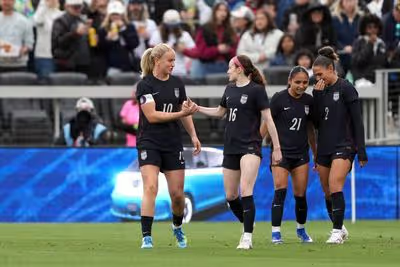
Rose Lavelle, in her 100th career start, opened the scoring in the ninth minute and later provided the assist for the go‑ahead goal in the 48th minute to captain Lindsey Horan, 31. The match also marked the first start and minutes back for Sophia Wilson since 2024, a storyline that emphasizes player welfare and the evolving shapes of careers in the women’s game.
Thompson sisters: rising profiles
Gisele and Alyssa Thompson started together for the fourth time, a record for sisters on the national team. Alyssa’s move from the NWSL to Chelsea has increased her international visibility, and Gisele’s defensive work rate — wide coverage behind and incisive runs ahead — was a live demonstration of why she’s on the World Cup bubble. A late positional lapse in the 61st minute allowed Riko Ueki to score Japan’s goal, a reminder that young fullbacks still have learning to do at elite international level.
What this result indicates
The victory was solid but not a statement of dominance. Hayes now has two immediate follow‑ups to refine tactical cohesion and give younger players the minutes they need. Winning a tight, high‑pressure friendly against a top‑five opponent is useful currency; the challenge is turning these incremental gains into consistent, high‑quality performances.
News to know: Earps, youth initiatives and women’s health science
Mary Earps reflects as international career is honored
Goalkeeper Mary Earps returned for a celebratory international retirement ceremony after a fraught period with her national setup. Now focused on club football at Paris Saint‑Germain and grassroots work off the pitch, Earps has launched KeepHer, a partnership aimed at giving girls free goalkeeping lessons and addressing unequal access to specialist coaching. Her profile — outspoken, imperfect and influential — ensures she’ll remain a force in efforts to widen pathways for young players.
Women’s health research: moving beyond “little men”
Sports science focused on female athletes is slowly evolving past simplistic models that treat women as scaled‑down men. Researchers face a frustrating gap between public demand for definitive answers (ACL prevention, recovery timelines, menstrual cycle impacts) and the pace of credible, reproducible science. Progress is being made, but coaches and federations must temper urgency with rigor to avoid false promises.
Concacaf qualifying shocks and standout scorers
Concacaf World Cup qualifying has produced lopsided results as lower‑resourced programs face established nations. Costa Rica’s 21-0 win over the Cayman Islands was the tournament’s headline: Fenerbahçe’s María Salas and Kansas City Current’s Rocky Rodríguez scored hat tricks, while Atlético Madrid’s Priscila Chinchilla netted seven goals in one match. The scoreline raises questions about competitive balance in early qualifying stages and underscores the need for more investment across the region.
What to watch next
USWNT vs Japan — two more chances
The teams meet again tomorrow in Seattle and once more later this window, offering Emma Hayes the chance to tinker and for fringe players to stake claims. More than 35,000 tickets sold suggests strong local interest and an expectation for a livelier sequel.
England vs Spain — Nations League spotlight
Spain’s impressive run faces a stern test against England in World Cup qualifying. Selection calls — including whether a young prospect like Erica Parkinson will join the senior group — are storylines to track. Tactical battles between Sarina Wiegman’s England and Spain’s possession model remain must‑see television for coaches and scouts.
Quick hits: club news and troubling developments
Kansas City Current
Kansas City won their Teal Rising Cup, and striker Temwa Chawinga scored her first goal since returning from a season‑ending injury, signaling an encouraging return to form ahead of the NWSL season.
Abuse scandal in Czech football
A Czech coach secretly recorded female players — some as young as 17 — in locker rooms over several years. He has been banned from coaching domestically but remains active in the sport in other ways, a disturbing gap that highlights inconsistent safeguarding measures and the urgent need for stronger, enforceable protections.
Labor progress beyond soccer
A transformative collective bargaining agreement in another women’s sport has ripple effects: improved standards in pay, travel and healthcare create a benchmark that national federations and leagues in women’s soccer can — and should — study as they negotiate their own futures.
Why this collection of stories matters
These developments — from Eta’s appointment to the USWNT’s measured win and the spotlight on player welfare and research — collectively illustrate a sport in transition.
Progress is real, but uneven; institutional support and careful, consistent follow‑through will determine whether headlines evolve into systemic change or momentary milestones.
21 Best Defenders in Football History [Ranked]
For fans and administrators alike, the question is no longer whether change is possible, but whether the structures exist to sustain it.
 Theathleticuk