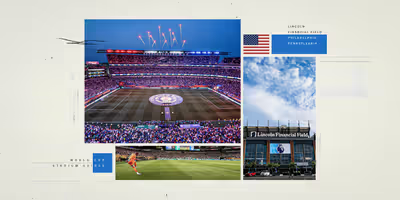
Lincoln Financial Field — to be called Philadelphia Stadium for the 2026 World Cup — will host six matches including Brazil vs Haiti and a crucial Round of 16 game; renovations like a hybrid pitch and removable corners tailor the venue for FIFA, while heat, transit ease and Philly’s famously intense fan culture promise a unique, often unforgiving matchday environment.
Philadelphia Stadium at a glance
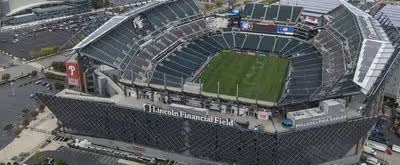
Lincoln Financial Field, commonly known as The Linc, will operate under the FIFA-compliant name Philadelphia Stadium for the 2026 World Cup. Opened in 2003, the venue has long been the Eagles’ fortress and a multiuse arena for college football, concerts and marquee events. For the tournament it will host six matches, including high-profile group games and a Round of 16 tie.
Why the Linc matters to the World Cup
This is the city’s first time hosting World Cup matches since the U.S. joined tournaments in 1994. The Linc’s large capacity, transport links and hardened event-day infrastructure make it a practical, high-impact choice. Its identity as an NFL stadium means a loud, intimate atmosphere that will shape players’ experiences and fan narratives throughout the tournament.
History, naming and home teams
Lincoln Financial Field opened in 2003 at a reported $512 million cost. The Eagles have made it their home ever since. Temple University’s Owls also use the venue for college football, and the stadium has hosted MLS fixtures, outdoor NHL games and major concerts, proving its adaptability for global events.
World Cup naming and stadium footprint
Under FIFA rules the corporate naming rights are suspended for the tournament, so the venue will be presented as Philadelphia Stadium. The ground sits roughly four miles south of downtown Philadelphia — close enough for Center City access, but far enough to require planning for transport and weather exposure.
Capacity, attendance and matchday layout
Standard NFL configuration holds around 67,500, with the stadium record topping 77,900 for a concert. For the World Cup the capacity will be slightly adjusted to roughly 65,827 to accommodate FIFA requirements, media and broadcast infrastructure. Removable corners already embedded in the design will be taken out to allow for a full-size soccer pitch and FIFA sideline setups.
Pitch changes and playing surface
Grounds crews will replace the stadium’s Bermuda grass with a hybrid turf that blends natural grass and synthetic fibres. That surface has precedent at major international events and elite club training grounds, aiming to match the feel players expect at top levels. The hybrid should offer better resilience under heavy use and reduce variability between club and international surfaces.
Climate, comfort and what fans should prepare for
Philadelphia’s summer climate brings heat and humidity rather than desert extremes. Expect daytime highs commonly in the mid-80s to low-90s Fahrenheit (around 29–33°C) with high humidity; urban heat island effects can intensify conditions near the stadium. Lincoln Financial Field is open-air, so bring sun protection and hydrate. Kick-off times in late afternoon or early evening will mitigate but not eliminate heat concerns.
Getting to Philadelphia Stadium
Public transit is the most straightforward option. The Broad Street subway (SEPTA) serves NRG/AT&T Station within a short walk of the stadium from Center City. Typical downtown rides take about 25 minutes and are inexpensive. The venue is also walkable for adventurous fans willing to traverse South Philadelphia neighbourhoods. Driving down I-95 is the direct route but expect heavy traffic and limited parking. Complimentary postgame transit services will be offered; check official tournament guidance for details.
Atmosphere, tailgating and fan culture
Philly fans are famously vocal and the stadium’s design concentrates noise effectively. A deep tailgating culture will likely transfer to the World Cup, adding pregame energy but also amplifying security and crowd-management needs. Expect robust local food offerings inside the bowl — regional staples such as cheesesteaks and crabfries are part of the gameday experience — and visible nods to Eagles lore around the concourses, including the “Philly Special” statue.
Memorable moments at the venue
The Linc’s history is rich with sporting moments: the “4th and 26” playoff escape, Super Bowl-winning campaigns with decisive NFC Championship performances, an outdoor NHL contest that drew nearly 70,000 fans, and headline concert residencies. That competitive and cultural history feeds into the stadium’s reputation as an event-stage where history can be made.
Match schedule at Philadelphia Stadium (local times)
June 14 — Ivory Coast vs Ecuador (Group E) — 7pm
June 19 — Brazil vs Haiti (Group C) — 9pm
June 22 — France vs Iraq (Group I) — 5pm
June 25 — Curaçao vs Ivory Coast (Group E) — 4pm
June 27 — Croatia vs Ghana (Group L) — 5pm
July 4 — Round of 16: Winner Match 74 vs Winner Match 77 — 5pm
What this means for teams and fans
The hybrid turf and stadium configuration will give teams a reliable surface and a compact, intense spectator environment. For technically gifted sides, the firm hybrid will reward sharp passing and quick transitions; for teams that thrive on atmosphere, the concentrated crowd noise can feel like a hostile away day.
For fans, Philadelphia offers short travel times from the city core and an authentic sports culture — but also heat, congestion and a need to plan logistics.
Final analysis
Philadelphia Stadium combines modern infrastructure with a fan base that can make matches feel like knockout fixtures regardless of competition stage. The stadium’s upgrades align it with FIFA standards, but the real wildcard remains the crowd and climate.
Expect memorable atmospheres, logistical efficiency for those using public transit, and a World Cup setting that will feel unmistakably Philadelphian.
 Theathleticuk