
Spain's 1-0 victory over Argentina in the 2026 FIFA World Cup final in New Jersey capped a historic tournament: the first 48-team edition delivered 104 matches, unprecedented global scale and a clear inflection point for soccer in the United States, while raising fresh questions about competition format and FIFA's appetite for even larger tournaments.
Spain stuns Argentina in New Jersey final
Spain edged Argentina 1-0 to lift the 2026 FIFA World Cup trophy in a tightly contested final played in New Jersey. The result concluded a marathon 104-match tournament that stretched across North America and showcased tactical discipline, defensive resilience and a reassertion of Spain’s long-term footballing project.
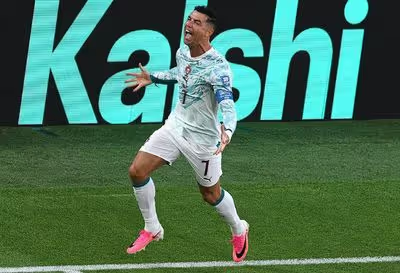
Game defining moments
The final was decided by a single decisive moment — a clinical finish that separated two well-matched sides. Spain’s ability to control transitional phases and neutralize Argentina’s creative outlets proved decisive. Argentina pushed, but could not break through, leaving questions about their attacking cohesion in high-stakes moments.
A 48-team experiment that mostly worked
This World Cup was the first staged with 48 teams, increasing representation and delivering more stories from emerging football nations. The expanded format produced a richer global tapestry and more knockout-round drama. It also exposed tournament design tensions: fixture congestion, competitive balance in group stages and variable match quality across early games.
Logistics and scheduling under strain
Hosting 104 matches across multiple cities tested infrastructure, travel and recovery protocols. Organizers largely managed stadium operations and broadcasting windows, but the scale amplified scheduling strains for players and squads. The tournament demonstrated that expansion is viable, but not without tougher demands on calendars and squad depth.
Impact on the United States and domestic soccer
As host nation and primary market, the United States benefited from heightened attention and commercial activity. Stadium turnouts, TV audiences and grassroots engagement spiked, reinforcing soccer’s steady rise in the American sports landscape. For MLS, youth academies and national team development, the event offers momentum to convert interest into sustainable growth.
What U.S. stakeholders should prioritize
American clubs and governing bodies must capitalize on the exposure by improving coaching pathways, expanding youth scouting and accelerating investment in facilities. Short-term buzz is useful; long-term gains require strategic follow-through to translate fan interest into a stronger domestic ecosystem.
FIFA’s expansion ambitions and the tournament’s future
With FIFA already contemplating further expansion, organizers face a trade-off: growing access versus preserving competitive integrity. Larger tournaments can deepen the game’s global reach, but risk diluting early-round drama and increasing demands on players. Future formats should aim for innovation that protects match quality while broadening participation.
Possible reforms to watch
Expect debates on group-stage design, seeding methods and calendar coordination with continental competitions. Incremental reforms — such as modified group sizes, clearer pathways for competitive balance and improved player welfare measures — would address many of the criticisms surfaced in 2026.
Key takeaways
Spain’s triumph marked a tactical, disciplined campaign crowned in New Jersey. The 48-team World Cup delivered expanded global engagement and storytelling, but highlighted structural challenges that will shape FIFA’s choices moving forward.
Eyewitness account: the quiet moments fans missed as Messi left his final World Cup
For the United States, the tournament was a watershed moment: the opportunity now is to convert short-term enthusiasm into long-term institutional gains for the sport.
 The Mirror Us