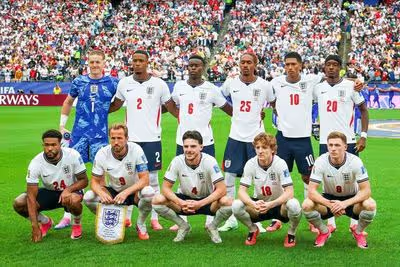
England’s elimination stings, but the World Cup revealed a crucial fact: the national team’s core was forged from a multicultural talent pool—players born abroad or with immigrant roots who lifted the squad and reframed debates about identity, skill development and the future of English football.
England’s exit and the bigger picture
England’s loss will dominate headlines, but the more enduring story from this tournament is how the squad united the country. On the pitch, moments of brilliance and collective resilience showed England remains close to world-class; off it, the composition of the squad offered a powerful rebuke to narrow views about national identity and where elite talent comes from.

Multicultural squad, single purpose
Many of the players who carried England deep into the competition were either born abroad or have parents from overseas. That mix — from African and Caribbean heritage to Irish connections — has become a defining feature of the modern England squad. Names like Bukayo Saka, Marcus Rashford, Jude Bellingham, Declan Rice, Marc Guéhi and others represent a generation comfortable wearing Three Lions while drawing on diverse backgrounds.
How that diversity translates on the field
Diversity here is not just symbolic. Different cultural influences and pathways into elite youth systems have delivered a broader skill set and competitive edge. The team’s technical flair, athleticism and tactical flexibility are products of an expanded talent pool: grassroots coaches, community clubs and immigrant families who have invested in young players for decades.
Why this matters beyond football
Sport often reflects society. When a national team relies heavily on players with immigrant roots, it highlights the practical benefits of openness: deeper talent futures, stronger local clubs and more resilient national teams. Politicians who reduce immigration debates to slogans miss the real-world contributions that shape public services, workplaces — and, yes, football pitches.
National unity and cultural confidence
This squad did something that politicians and pundits rarely manage: it created a shared moment of pride. Whether fans were watching in pubs or at home, the players’ performances raised the flag in a way that felt inclusive and earned, not performative. That cultural capital matters for the game’s growth and for how the country sees itself.
Implications for England’s footballing future
The pathway issues are clear. To sustain success, England must continue investing in scouting, youth coaching and community access — particularly in diverse urban areas where many future internationals emerge. The FA and clubs should view the tournament as proof that inclusive development systems produce results on the biggest stages.
What could happen next
Expect nuanced debates about talent identification and support for grassroots football. Coaches will study how this blend of backgrounds creates tactical variety, while clubs will redouble efforts to retain and develop young prospects. For England, the immediate task is learning from the tournament’s shortcomings while preserving the constructive elements that propelled the team.
Conclusion
Losses hurt, but the larger takeaway is unmistakable: England’s competitive core is powered by a multicultural pipeline that strengthens the national team and broadens the game’s appeal.
Yorke criticises Bruno Guimaraes as 'solid' but not United's creative spark
That should be celebrated and protected — on sporting and civic grounds — as the next cycle of talent gears up for international duty.
 Mirror