Lamine Yamal’s father, Mounir Nasraoui, missed Spain’s World Cup final in New Jersey as the family privately grieves the recent death of Yamal’s grandfather. Nasraoui stayed in Spain, offered public support on social media and celebrated with close relatives while the 19-year-old Barcelona winger helped Spain secure a 1-0 victory over Argentina.
Why Yamal’s father did not attend the World Cup final
Mounir Nasraoui did not travel to North America for Spain’s World Cup campaign as the family mourned the recent death of Lamine Yamal’s grandfather.
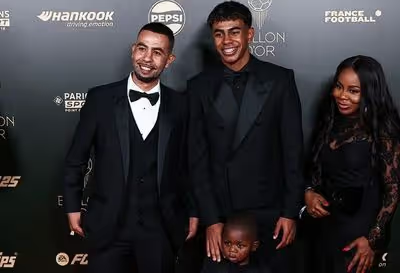
The family has chosen to grieve privately, and details about the timing or cause of the grandfather’s death have not been released.
Public support from afar: social posts and family celebration
Nasraoui remained visible online, sharing images and videos of his son—one post even used AI-generated imagery showing Lionel Messi handing the trophy to Yamal. While he was absent from the stands in New Jersey, Yamal celebrated the title with close family members, including his mother, Sheila Ebana, and his three-year-old half-brother, Keyne, who became a tournament darling during celebrations.
How the final unfolded: Yamal and Spain’s triumph
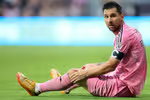
Spain defeated Argentina 1-0 in the World Cup final, capping a tournament in which Lamine Yamal played a pivotal role despite a hamstring issue. The Barcelona winger scored once across eight matches and provided consistent attacking impetus as Spain secured their second men’s World Cup. The victory over a Lionel Messi-led Argentina further cements Spain’s re-emergence among world football’s elite.
What this absence reveals about priorities off the pitch
A family tragedy juxtaposed with a sporting pinnacle underscores that elite athletes often balance colossal professional highs with private personal lows. Nasraoui’s decision to stay in Spain reflects a family-first approach; it also illustrates the human context behind headline-grabbing performances.
Background: Nasraoui’s role in Yamal’s rise and recent challenges
Nasraoui has been a constant presence throughout Yamal’s rapid ascent from Barcelona prodigy to international star. The family’s North African roots and public support have been part of Yamal’s narrative since his first-team debut at 15 and his Spain debut at 16. In recent years Nasraoui has faced personal adversity, including a stabbing incident outside Barcelona and health issues that reportedly limit long flights—factors that help explain his absence from this World Cup.
What the win means for Yamal, Barcelona and Spain
For Yamal, the World Cup title accelerates an already spectacular trajectory: Barcelona’s teenage winger now enters club and international windows as a proven big-game contributor. For Spain, the victory confirms a successful generational refresh and tactical identity. Clubs and national team staff will now manage his workload carefully, particularly with the hamstring issue still fresh.
Short-term outlook and what to watch next
Expect cautious handling of Yamal’s fitness in the coming weeks as Barcelona prepares for its domestic season. His mental state—buoyed by triumph, tempered by family loss—will be an important factor for coaches and teammates. On the national stage, Spain’s coaching staff will aim to preserve the momentum from the World Cup while integrating younger talents around Yamal.
Why this story matters
The narrative of Lamine Yamal’s World Cup win without his father in the stands adds emotional complexity to a straightforward sporting headline. It reminds fans that victories are rarely without personal cost, and that behind every young superstar is a support system navigating its own challenges.
Post-match chaos: FIFA probes Argentina after violent scenes in World Cup final
For analysts, it reinforces that player management must consider both physical recovery and personal wellbeing after peak tournaments.
 The Mirror Us