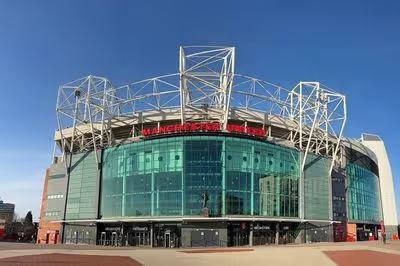
Manchester United has confirmed plans for a new 100,000-seat stadium located 350 metres from Old Trafford, enabling the first team to remain at the existing ground during construction. The club has yet to decide whether the 74,000-capacity Old Trafford will be retained, reduced or redeveloped; talks with Trafford Council and supporters will shape the site's future, while final designs and a clear timeline remain pending.
United picks new stadium site but leaves Old Trafford’s future open
Manchester United has identified land for a 100,000-seater stadium roughly 350 metres from the current Old Trafford footprint, a move designed to keep first-team matches at the existing ground while construction proceeds. The location — recently acquired by the club — gives United room to build without turning matchdays into a building-site ordeal.

Collette Roche, the club executive leading the development, stressed the priority is delivering a new stadium with the right transport links and surrounding facilities before finalising what happens to Old Trafford.
Why 350 metres makes strategic sense
The chosen distance is pragmatic. It reduces construction disruption for players and fans, protects matchday access, and avoids the logistical nightmare of staging football in close proximity to heavy construction.
That buffer also gives United control over phasing: build the flagship venue first, then determine how the existing 74,000-capacity Old Trafford should be treated within broader regeneration plans.
Old Trafford: retain, reduce or redevelop?
No final decision has been made about Old Trafford’s fate. Options on the table include keeping the stadium in some form, reducing capacity, demolishing it, or repurposing the land for housing, jobs and commercial development.
United emphasises that any choice will be subject to consultation with Trafford Council and supporters. The club has already re-engaged its Fans’ Advisory Board to identify which elements of history and ritual must be preserved and which can evolve.
Design debates and the timeline question
Early renders have featured a controversial "circus tent" motif that split opinion among supporters. Roche made clear those visuals are not immutable: finalised designs will emerge later, once planning and community consultation progress.
United is cautious about committing to a public completion date. The club sees the 2035 Women’s World Cup as a useful benchmark and believes delivering before that milestone is realistic, but insists planning approvals and construction sequencing will determine the actual timeline.
What the design stage will settle
Design choices will shape construction method, planning approvals and the eventual matchday experience. They will also influence whether and how elements of Old Trafford’s heritage are transplanted — from sculptural features and memorials to rituals and fan-facing spaces.
Supporter input will be central to those decisions, determining what is carried forward in the new stadium and what becomes part of the old ground’s legacy.
Regeneration leverage and local impact
United’s ownership of adjacent land gives the club leverage in shaping a wide regeneration package: transport upgrades, new homes, jobs and commercial development are all linked to the stadium decision.
That creates a political and planning dynamic. Trafford Council will play a decisive role in approving plans that balance sporting ambition with local housing and employment priorities.
What this means for fans and the club
Keeping the first team at Old Trafford during construction preserves continuity and protects short-term on-field ambitions. But the open-ended approach to Old Trafford’s future risks prolonged uncertainty for fans attached to the stadium’s history.
If United opts to retain or downsize Old Trafford rather than demolish it, the club can preserve matchday rituals and local identity. If it chooses redevelopment, the club will need careful heritage curation to avoid alienating long-standing supporters.
Next steps
United will proceed through a design, planning and consultation phase, working with Trafford Council and fan groups. Final designs and a detailed construction timeline are the clearest milestones to watch next.
The club’s statements indicate a deliberate, phased strategy: secure a buildable site, protect matchday operations, then decide Old Trafford’s long-term role.
Pulisic: 'I wanted to deliver more' — admits fitness issues after USMNT World Cup exit
For supporters, the immediate priority should be engaging in the consultations that will determine what is retained, lost or transformed.
 Mirror