
Norway arrive in Miami for their first World Cup quarter-final against England hampered by illness and travel fatigue that have disrupted selection and training. Key contributors have been affected, forcing coach Ståle Solbakken to manage recovery and rotation ahead of a match where fitness may decide margins against the Three Lions.
Norway's fitness cloud over quarter-final with England
Norway head into a historic World Cup quarter-final in Miami under a cloud of illness and exhaustion after a tournament of relentless travel. The squad, buoyed by Erling Haaland's goals and Martin Ødegaard's influence, have nevertheless seen players miss minutes through fevers, coughs and general malaise.
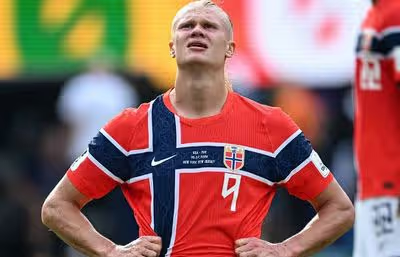
Coach Ståle Solbakken has acknowledged scattered symptoms across the group, prompting concern about readiness for a high-stakes clash with England.
Who has been affected?
Jorgen Strand Larsen missed Norway's opening game due to a fever, while right-back Marcus Holmgren Pedersen was unavailable for the knockout tie with Brazil after succumbing to a bug. Solbakken has been visibly under the weather at times, and multiple squad members have reported coughing and respiratory irritation — a pattern the coach links to the cumulative strain of flights, venues and air conditioning.
Travel load and tournament demands
Norway's campaign has involved heavy cross-country travel across the United States, compounding recovery challenges. Long transfers, changing hotels and differing climates increase the physical toll, particularly for a squad making its maiden run into the latter stages of the World Cup. These logistical strains matter: marginal reductions in recovery can influence sharpness, concentration and late-game energy.
On-field implications for Norway
Fitness issues blunt tactical flexibility. If Pedersen or other starters remain doubtful, Solbakken may be forced into selection compromises that alter defensive balance or attacking transitions. Norway's reliance on Haaland's finishing and Ødegaard's creativity means preserving their attackers' sharpness is vital; any drop-off in support from midfield or full-backs could stifle service into the box.
Rotation and contingency
Expect careful minutes management and possible tactical tweaks to conserve energy — more compact defending, fewer high-octane pressing phases, or selective substitutions to counter late-match fatigue. Norway's depth will be tested; the emergence of dependable backups could determine whether the side sustains its upset momentum.
Why this matters to England
For England, Norway's physical concerns are both an opportunity and a warning. The Three Lions must still respect the attacking threat posed by Haaland and the midfield orchestration of Ødegaard. But if Norway arrive less than fully fit, England can exploit transitions and force intensity in quick bursts to expose tired limbs.
What England should target
England will likely probe high-tempo periods early, aim to pin Norway's full-backs and win second balls to prevent the Scandinavian side settling into a measured rhythm. Maintaining sharpness at altitude and travel recovery of their own remains crucial, but England arguably benefit from Norway's current fragility.
Looking ahead — stakes and likely outcomes
This quarter-final is as much a medical and logistical contest as a tactical one. If Norway can manage recovery and preserve core players, their momentum and confidence make them dangerous opponents. If fatigue persists, England could tip a closely poised tie with higher-intensity phases and late-game dominance.
Tebas calls FIFA's Balogun ban reversal 'tip of the iceberg' and demands greater league voice
Either way, squad management over the next 48–72 hours will be decisive.
 The Mirror Us