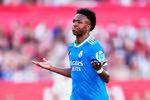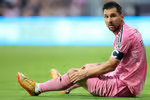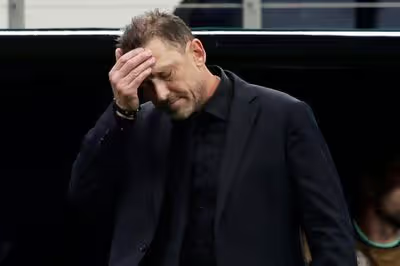
Australia were knocked out of the World Cup by Egypt after a 1-1 draw and a 4-2 penalty shootout loss, igniting fierce criticism of coach Tony Popovic for substituting Mathew Ryan on for penalties and the choice and order of takers. The decision, plus two missed spot-kicks from central defenders, has put Popovic’s tournament management and judgment under intense scrutiny.
Australia eliminated by Egypt after controversial penalty shootout
Australia and Egypt were deadlocked 1-1 after 120 minutes before Egypt prevailed 4-2 on penalties in the World Cup Round of 32. Emam Ashour opened the scoring in the 13th minute; Australia levelled in the 55th minute via a Mohamed Hany own goal. The post-match focus fell squarely on Tony Popovic’s late substitution of Mathew Ryan for the shootout and the Socceroos’ penalty plan.
Key match details
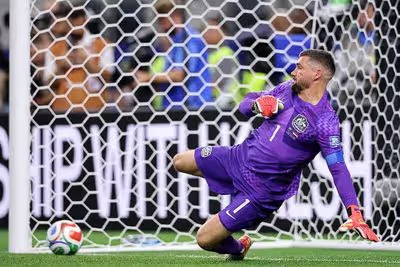
Australia 1 (own goal) — Egypt 1 (Emam Ashour) Match went to extra time and then penalties Egypt won shootout 4-2 Australian penalty misses: Harry Souttar and 18-year-old Lucas Herrington Popovic substituted Mathew Ryan on for Patrick Beach specifically for the shootout
Why the substitution became the flashpoint
Bringing Mathew Ryan on for Patrick Beach was presented as a shootout gamble that ultimately backfired. The logic coaches often cite — introducing an experienced, imposing keeper to unsettle penalty takers — has precedent. But in this case the incoming keeper did not make a decisive save, and the break in rhythm arguably disadvantaged Australia more than it helped.
That choice amplified scrutiny because Beach had been Australia’s starting goalkeeper through the tournament and was match-hardened. Cold substitutions for shootouts are high-risk: the psychological advantage of an intimidating frame matters, but so does familiarity with the game’s tempo and the mental flow of penalty takers.
Penalty order and taker selection compounded the issue
Two central defenders were tasked with spot-kicks and both missed, an outcome that intensified criticism of the taker order. Sending defenders to the spot is not inherently wrong—set-piece pedigree and composure can make them logical choices—but in context it looked like a misread of who should shoulder the responsibility in a decisive moment.
Fans and former pros were vocal. Landon Donovan said the coach “has a lot of explaining to do,” and Marcelo Balboa questioned whether Popovic had overthought the situation. The tone was clear: this felt like an avoidable self-inflicted elimination.
What this means for Popovic and the Socceroos
This exit raises immediate questions about tactical decision-making and leadership under pressure. For a coach overseeing a promising generation, a high-profile error in knockout-stage management damages credibility. The players’ overall tournament work — getting this far — will be overshadowed by the manner of the defeat.
For Australian football, the lessons are practical: penalty preparation, clearer hierarchy for takers, and contingency plans that prioritize match rhythm and player confidence. The coaching staff will need to show they can translate those lessons into structural changes rather than offering only post-match explanations.
What’s next for Egypt
Egypt advance with momentum from a dramatic shootout win and will prepare for their next opponent in the knockout bracket. The victory offers a confidence boost and vindicates their composure in pressure moments; the level of scrutiny they face will shift from split-second tactics to sustaining performance in the next round.
Final take
This was not simply a case of bad luck. Tactical choices — swapping goalkeepers for a shootout and the order of penalty takers — were decisive and, in hindsight, miscalculated. The result is a clear-eyed reminder that in tournament football, management of marginal moments often determines who progresses.
Villa prepare formal bid for Lens keeper Robin Risser as Martínez heads to Juventus
Popovic’s gamble will be debated; the immediate need for Australia is to extract concrete lessons and rebuild trust around decision-making in clutch situations.
 The Mirror Us