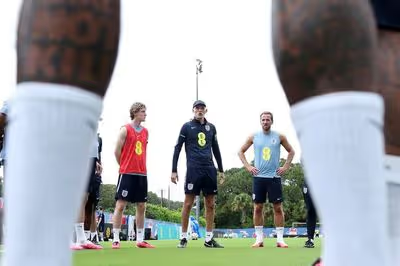
England arrive at World Cup 2026 facing a serious climate test: North American heat and humidity that, former US defender Matt Besler warns, will force tactical and physical adjustments. With warm‑up work in Miami and bases in Kansas City and matches in Boston and New York, Gareth Southgate’s side must adapt preparation and in‑game management to avoid being undone by the weather.
England’s World Cup plans collide with North American humidity
England have deliberately primed themselves with warm‑weather training ahead of World Cup 2026, but familiar conditions for many North American and South American players pose a real challenge. Former US international Matt Besler, who spent his career in Major League Soccer, says humidity changes how teams must approach matches — tactically and physically.
Besler’s warning: humidity will alter the game
Besler, experienced in Kansas City’s summer climate, stresses that humidity is not just uncomfortable; it affects tempo, recovery and decision‑making. “Humidity is difficult to play in. You will have to change your approach a little bit,” he says, noting that some teams will naturally cope better because of their domestic climates and styles of play.
Where England will feel the heat: Miami, Kansas City, Boston, New York
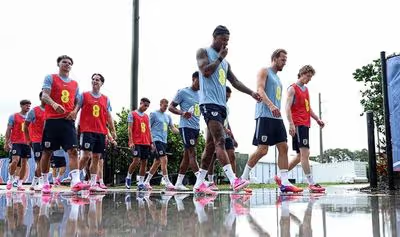
England’s pre‑tournament camp in Miami was designed to acclimatise to warm weather, though rain interrupted parts of their preparations. Their World Cup schedule brings potential muggy conditions in Boston and New York, while Kansas City — the team’s training base — routinely delivers hot, humid June days and occasional thunderstorms. Those swings can complicate planning and recovery windows.
Why humidity matters tactically and physically
Humidity raises heart rates, speeds glycogen depletion and lengthens recovery between high‑intensity efforts. Practically, that often means slowing the tempo, conserving energy in possession, choosing moments to press and managing substitutions more proactively. Teams with a high‑intensity, nonstop press face a trade‑off: sustain pressure early and risk late fatigue, or temper aggression and invite territorial concessions.
How this affects England’s style under Southgate
Gareth Southgate’s England typically blend structured pressing with possession phases. The climate could nudge them toward more conservative game management: measured pressing triggers, more rotation in midfield, and tactical substitutions to maintain intensity. Conditioning programs will be scrutinised; so will medical and hydration protocols — aspects England have emphasised but must execute flawlessly.
Comparative advantage: who benefits?
South American and some CONCACAF teams are accustomed to humid environments and may translate that into a subtle edge in stamina and rhythm. Conversely, many European teams used to temperate summer conditions could struggle early. That said, elite squads prepare meticulously; edge is often marginal and comes down to execution and in‑match adjustments.
Local insight: Kansas City’s mercurial weather
Kansas City’s summers are famously changeable. Expect hot, muggy spells interrupted by short, sharp storms. That variability creates planning challenges — training load must be flexible, with recovery sessions timed around weather windows and matchday strategies adjusted to humidity forecasts.
What to watch at the World Cup
- Substitution patterns and timing: look for earlier and more frequent rotations.
- Midfield tempo: whether England slow possession to protect players or try to sustain high tempo.
- Physical metrics: distance covered at high intensity and sprint frequency late in matches.
- Tactical tweaks: selective pressing and compact defensive shapes to conserve energy.
Conclusion — preparation will determine payoff
Humidity isn’t an excuse; it’s a variable that elite teams plan for and exploit. England’s pre‑tournament choices and in‑game management under Southgate will reveal how seriously they treat the challenge.
Done well, acclimatisation and strategic concessions can preserve England’s strengths; done poorly, the climate can erode them at decisive moments.
 Mirror