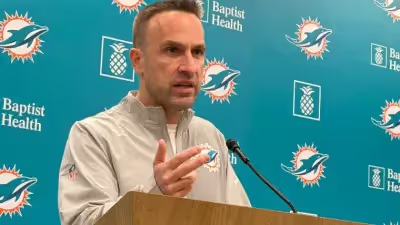
Armed with two first-round picks (No. 11 and No. 30), the Miami Dolphins head into the 2026 NFL Draft focused on long-term roster construction. The front office appears primed to prioritize offensive line reinforcements, wide receiver depth and cornerback upgrades — choices that will shape quarterback Malik Willis’s outlook and define Miami’s trajectory for years to come.
Two first-round picks reshape Miami Dolphins' Draft priorities
The Dolphins enter the 2026 NFL Draft with clear flexibility: No. 11 and No. 30 give Miami the ability to address immediate needs and draft for the future. With the team out of strict "win-now" mode, the priority list centers on offensive line, wide receiver and cornerback — each tied directly to the success of quarterback Malik Willis and the identity of the roster.

Why the offensive line sits atop the list
Protecting and building around Malik Willis is the connective tissue of Miami’s offseason calculus. Upgrading the guard spots and finding a long-term plan at right tackle are practical imperatives. A versatile prospect who can slide inside or play tackle — a Spencer Fano-type profile — would check multiple boxes: immediate starter potential and long-term flexibility.
Wide receiver: replacing elite production
Offseason departures at the top of the depth chart left a glaring need for playmaking wideouts. Ohio State’s Carnell Tate, USC’s Makai Lemon and Arizona State’s Jordyn Tyson are examples of first-round receivers who can step in and stretch the field. Because the 2026 WR class runs deep, Miami might be comfortable waiting until later in Round 1 or trading back to maximize value.
Cornerback: a chronic weakness
Cornerback has been an organizational headache for the Dolphins for multiple seasons. Taking a top cover corner at No. 11 — think Mansoor Delane’s upside — would be a high-reward move. If Miami prefers to split its first-round value, there are solid CB options projected to be available at No. 30, such as Jermod McCoy, Colton Hood or Chris Johnson, who can patrol outside or play nickel roles.
What this approach means for the team
Prioritizing the trenches signals a commitment to giving Malik Willis a realistic environment to develop rather than forcing a short-term splash. Investing in the offensive line addresses a foundation issue that affects both the passing and running game. Selecting a receiver early would accelerate the offense’s playmaking capacity; investing in cornerback would stabilize a defense that has struggled to find consistent coverage.
Draft strategy — flexibility and outcome-focused moves
With two first-round selections, Miami can pursue multiple routes: draft a tackle/guard at 11 and a corner or receiver at 30; take a top receiver early and shore up the trenches later; or trade within the first round to target a preferred player. The best path will balance immediate roster holes with long-term construction, favoring players who can contribute quickly while remaining building blocks.
Bottom line
The Dolphins’ twin first-round picks give them rare leverage. Choosing between offensive line, wide receiver and cornerback is less about preference and more about sequencing: build a protective core for the quarterback, replenish lost pass-catching talent, or fix persistent coverage issues.
Potential Jaguars-Brian Thomas Trade Gets Major Update Hours Before NFL Draft (worldofsports.io)
How Miami uses No. 11 and No. 30 will reveal whether the franchise truly prioritizes sustainable development over short-term optics.
 Sporting News