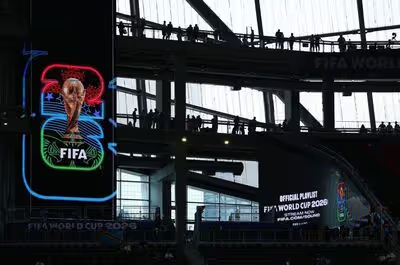
Breaking: Atlanta is deploying enhanced security for the World Cup semi-final between England and Argentina at Atlanta Stadium, with 1,600 officers, separate stadium entrances for rival fans, a ban on politically charged flags and close coordination with federal partners to prevent clashes and ensure a peaceful, celebratory match day.
Atlanta ramps up security for England v Argentina World Cup semi-final
Atlanta Police Department has reinforced citywide public safety measures ahead of the World Cup semi-final between England and Argentina at Atlanta Stadium.

Authorities say roughly 1,600 officers will be deployed, rival supporters will be routed through separate stadium entrances, and banners or flags with provocative political or racial messages will be barred from entry.
What the security plan includes
APD is increasing visible policing across the city and inside match precincts. Officers will be strategically assigned to crowd-control points, transport hubs and fan zones. Law enforcement is coordinating with the FBI and other federal public-safety partners on operational planning. Stadium entry procedures will be stricter, with searches and controlled access intended to minimize flashpoints.
Fan segregation at the gate, not always inside
Officials say rival fans will be channeled through separate entrances for the match — a first at this tournament in Atlanta. However, FIFA’s centralized ticketing and mixed-seat allocations make full internal segregation, as seen in domestic club matches, effectively impossible. The entrance-focused approach aims to limit clashes before fans mix inside the stadium and in surrounding areas.
Flags, banners and the Falklands sensitivity
Argentina’s authorities requested a ban on flags or posters asserting claims over the Falkland Islands/Islas Malvinas; local officials have confirmed items with provocative political or racial content will be prohibited. This is a preventative measure rooted in the historical and emotional context that still informs England-Argentina encounters.
Why this match demands extra caution
The England–Argentina rivalry carries historical baggage, from contentious World Cup meetings to the aftermath of the 1982 Falklands conflict. That history raises the stakes for security planners despite the modern tournament’s broader improvements in fan behavior. England supporters have shown notable progress in conduct across North America, but authorities are prioritizing risk mitigation over optimism.
Analysis: measured, visible policing — balancing safety and atmosphere
Routing fans through separate entrances and banning inflammatory paraphernalia are sensible, targeted steps that reduce pre-match friction while avoiding heavy-handed inside-stadium segregation that ticketing realities make impractical.
Visible policing and federal coordination should deter organised trouble and reassure the public, but a highly securitized environment can blunt the spontaneous pageantry that fuels World Cup atmospheres.
What this means going forward
If match day proceeds without incident, the operation will be a template for handling high-profile fixtures with cross-border tensions. A peaceful semi-final would also underscore the sustained improvement in fan culture since the hooligan era, validating a proactive, intelligence-led approach.
If disturbances occur, scrutiny will fall on operational choices such as entry segregation versus in-stadium control and whether policing tactics struck the right balance between safety and fan experience.
Bottom line
Authorities are treating the England–Argentina tie in Atlanta as a high-priority public-safety event, emphasizing prevention, controlled access and interagency coordination.
Cucurella hails Spain's discipline as La Roja control France 2-0 to reach World Cup final
The strategy is pragmatic: limit combustible moments at arrival and entry, rely on strong visibility and partnership with federal agencies, and hope the match is settled on the pitch rather than in the streets.
 The Star