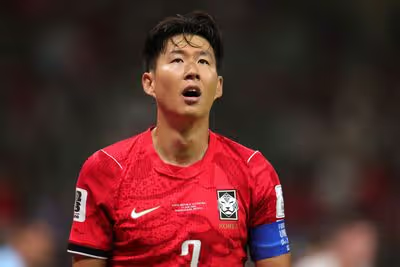
South Korea's squad has staged a media boycott at the World Cup after a leaked recording captured members of the Korean press making disparaging remarks about captain Heung-min Son’s shortened military service. The Korean FA accepted a face-to-face apology from newly elected press leaders, but players remain defiant, withholding non-mandated interviews as internal talks continue over how to repair relations ahead of the tournament.
Son apology fails to end Korea media boycott after leaked audio
South Korea's World Cup preparations were disrupted when players refused routine media duties following publication of a leaked audio clip in which members of the Korean press criticized captain Heung-min Son and other squad members. The team limited contacts to the minimum required by FIFA, citing shock and disappointment at the remarks heard in the recording.
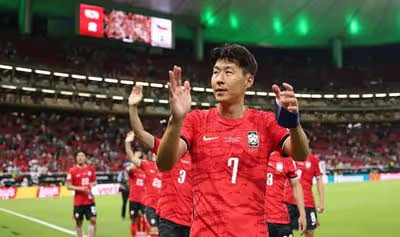
What happened at the Guadalajara base?
During training at the team's Guadalajara base, an audio recording of conversations among travelling journalists emerged, reportedly containing cynical comments about Son’s shortened military service and similar jibes aimed at other players. The leak prompted immediate anger within the squad and a collective decision to boycott non-mandatory media activity after a comeback win over the Czech Republic in which Son was substituted midway through the second half.
Korean FA response and apology to Son
The Korea Football Association (KFA) issued a formal statement expressing regret over the inappropriate remarks and emphasising its duty to protect the squad on the global stage. Initial mediation efforts faltered, leading to the resignation of the head of the travelling press corps. A newly elected media leadership team delivered a face-to-face apology to Son at the training base, which the KFA confirmed it accepted — yet the squad has not immediately lifted the boycott.
Why this matters: Son, service and South Korean public sentiment
Heung-min Son is not just the national team captain; he's South Korea's highest-profile footballer. The issue of reduced military service carries deep political and cultural sensitivity in Korea. Son received a shortened military commitment after contributing to a major continental triumph in 2018 — a decision that has long been debated domestically. Public disparagement from members of the media wounds player morale and inflames broader national passions, making this more than a routine training-camp controversy.
Team unity and the message from the dressing room
The players' unified refusal to engage with much of the press signals strong internal solidarity. That solidarity protects individual dignity and sends a clear message about acceptable conduct around the team. From a tactical and psychological perspective, the move reduces distractions but also risks alienating a domestic audience and complicating relations with the media throughout the tournament.
Practical implications for World Cup preparation
Short-term, mandatory press obligations under FIFA will still be met, but the boycott narrows the flow of planned interviews, features and access that often help build momentum and fan engagement. For coaching staff, minimizing off-field friction can be beneficial for focus and preparation, yet sustained tension with the media could create lingering distractions and strain the federation’s communication strategy during the group stage.
What happens next?
The KFA has said the squad will decide whether to end the boycott after internal discussions. Likely steps include formalising media conduct protocols, ongoing dialogue between team leadership and the press, and perhaps an independent review of how media access is managed at camp. Any resolution will require trust-building from both sides: genuine contrition and clearer boundaries from media representatives, and measured re-engagement from the players.
Analysis: media accountability meets player protection
This episode exposes a fault line between media freedom and the ethical responsibilities of journalists working in close proximity to national teams. For South Korea, where the captain embodies both sporting success and national debate, the stakes are high. The squad's collective action is a cautious, forceful defense of player dignity — sensible from a team-management standpoint — but it also places pressure on the federation and media organisations to implement tangible changes that prevent repetition.
Why the situation could influence team performance
Maintaining internal cohesion is essential at a World Cup; the boycott is a blunt instrument that has rallied the dressing room. If handled correctly, it can galvanise the team and sharpen focus. If mishandled, prolonged mistrust with the domestic press could erode public support at a delicate time.
KFA cuts media access after broadcasters mock Son Heung-min's military exemption
The coming days will reveal whether this standoff becomes a temporary boundary-setting act or a lingering distraction during South Korea’s tournament campaign.
 The Sun