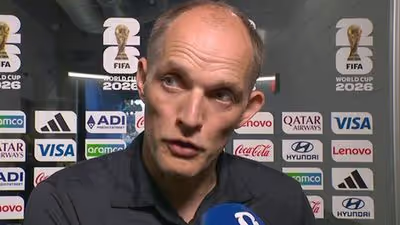
Thomas Tuchel has sparked controversy after suggesting England’s players failed to maintain their level in the 1-2 World Cup semi-final loss to Argentina, prompting criticism from former players and fans who called his substitutions and post-match comments evasive.
Tuchel under fire after Argentina comeback stuns England
England led until the 84th minute, only for Enzo Fernández to equalise and Lautaro Martínez to head home in stoppage time as Argentina overturned the deficit.
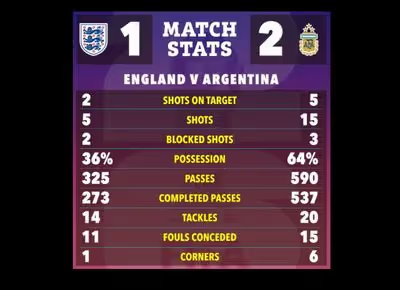
Lionel Messi orchestrated the late surge, turning a seemingly controlled England performance into a heartbreaking exit.
What Tuchel said — and why it matters
Tuchel defended his assessment after the game, stressing England “scored and conceded a lot of chances” and that the team “conceded so many chances and shots.” He explained the late change to a back five was intended to close gaps and counter aerial threats, and insisted ultimate responsibility rests with the coach if results go wrong.
That framing — acknowledging tactical choices but foregrounding a catalogue of player errors — has been read by many as shifting blame onto the squad. In the immediate aftermath, former internationals and supporters questioned both the substitutions and the tone of Tuchel’s defence.
Fan and pundit reaction
Criticism focused on two threads: the timing and nature of Tuchel’s substitutions, and his public posture. Voices close to the England setup called for more direct ownership of the tactical call that left the team passive after scoring, while fans on social channels accused him of quick criticism without accepting responsibility.
A former England goalkeeper candidly criticised the perceived lack of belief in the squad, reflecting wider unease about a manager who has been outspoken about player errors in recent fixtures.
Tactical read: why England lost momentum
England’s failure to sustain aggression after taking the lead is the clearest tactical takeaway. The decision to sit deeper invited crosses and second-phase chances, and Argentina exploited those weaknesses with pace and precision. Tuchel’s choice to resist an offensive substitution can be defended on paper, but when a match flips so quickly, control — not intent — becomes the metric fans and analysts judge.
Implications for England and Tuchel
Short term, England must regroup for the third-place play-off against France with morale and defensive cohesion on the agenda. Longer term, Tuchel faces questions about man-management and media handling: leaders who publicly dissect player failings risk eroding trust unless matched by clear acknowledgement when tactical decisions backfire.
What’s next
England will have little time to recalibrate before facing France in the consolation game. Argentina, buoyed by a late turnaround, progress to a final against Spain to contest the trophy.
From 1966 to 2026: England's semifinal record ahead of Argentina clash
For Tuchel, the aftermath presents a choice: double-down on his blunt post-match analysis or take visible responsibility for tactical calls that cost the team a place in the final.
 The Sun