


Several marquee stars left the World Cup conspicuously short of expectations. From Cristiano Ronaldo’s twilight struggles to Pedri’s faded influence, and underwhelming campaigns from Sadio Mané, Luis Díaz and Rayan Cherki, these five players failed to deliver the decisive performances their nations needed — and their teams may now face immediate tactical and selection questions.
Five World Cup stars who underdelivered and why it matters
Cristiano Ronaldo — Portugal
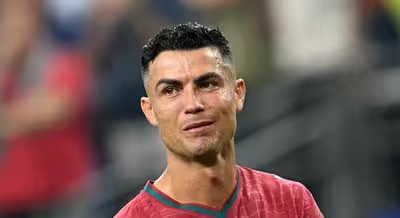
Cristiano Ronaldo entered the tournament as one of its most scrutinized figures and emerged as a symbol of a team out of sync. He scored twice against Uzbekistan and converted a penalty against Croatia, but those moments masked a broader invisibility in open play. At 41, Ronaldo’s mobility and positioning were noticeably diminished; Portugal often struggled to construct chances that finished through him rather than around him. Why it matters: Portugal must confront a transition in attack. Continuing with Ronaldo as an automatic starter limits tactical flexibility and risks stunting the development of younger forwards who need competitive minutes.
Pedri — Spain
Spain lifted the trophy without the Pedri of seasons past. The midfielder’s technical sharpness and influence in the early matches were patchy; he drifted and rarely dictated tempo until a stronger cameo in the final. Tactical tweaks saw Fabian Ruiz increasingly favored from the quarter-finals onwards, underlining a loss of the creative fulcrum Spain expected. Why it matters: Spain’s depth is clear, but Pedri’s dip raises questions about fitness management, role clarity, and whether his peak years will be as transformative as once assumed.
Sadio Mané — Senegal
Sadio Mané arrived with high expectations after a stellar AFCON, yet produced only a single assist while Senegal exited earlier than hoped. The attacking spark that once made him world-class was subdued; he struggled to influence prolonged spells of play and provide clinical finishes. Why it matters: Senegal are at a crossroads. If Mané’s influence is genuinely waning on the biggest stage, the national team must accelerate its search for new attacking leaders to replace a figure who has been central to their success.
Luis Díaz — Colombia
Colombia arrived as an intriguing dark horse but lacked cutting edge. Luis Díaz, fresh from a strong season at Bayern Munich, managed one goal and one assist — below what Colombia needed from their chief attacking outlet. Opportunities were created but not consistently converted, and Díaz’s tournament hinted at a mismatch between club form and international effectiveness. Why it matters: Colombia’s ambitions hinge on a sharper attacking threat. Díaz must reconcile his club role with national team responsibilities or Miguel Ángel’s side will continue to falter in knockout scenarios.
Rayan Cherki — France
Cherki’s World Cup resembled a missed opportunity. Used primarily as a supersub, he failed to impose himself when introduced, showing clumsiness and tentative decision-making at key moments. A public clash with Didier Deschamps after the third-place match compounded an already disappointing campaign and raised questions about temperament and readiness for high-pressure international duty. Why it matters: France have luxury in talent but not in patience. Cherki’s next steps must focus on consistent minutes and maturity; otherwise, he risks stagnating behind a glittering but crowded attacking pool.
Broader implications for teams and tournaments
Underperformance from household names reshapes narratives beyond individual reputations. National teams may need to rethink formations, introduce younger profiles sooner, or recalibrate expectations for legacy players. Coaches who persist with aging stars for sentiment risk tactical rigidity; conversely, abrupt purges can destabilize dressing rooms. The balance between experience and renewal is now the central managerial test.
What to watch next
Monitor selections in upcoming qualifiers and friendlies: will managers reward form or reputation? Watch also how clubs react — are these players given minutes to rebuild international standing or sheltered to preserve value? For fans and national teams alike, the off-season and next international window will be telling.
Final read
This World Cup proved that reputation can buy headlines but not results. The five names above remind us that tournaments expose current form more ruthlessly than any other stage.
How Argentina’s five-year football dynasty closed with the 2026 World Cup defeat
How these players respond — with reinvention, role adjustment or acceptance of a diminished mantle — will define the next chapter for their countries.
 Yahoo! News


