


A midweek flashpoint at Stamford Bridge: Chelsea winger Alejandro Garnacho endured a muted return against Manchester United, coming off the bench in a 1-0 defeat and — according to reports — facing sharp dressing-room criticism at half-time. The episode raises fresh questions about his form, squad harmony and whether Chelsea can salvage a costly summer signing who has struggled for goals and confidence this season.
Garnacho's rough outing shapes a bigger problem for Chelsea
Chelsea’s 1-0 defeat to Manchester United cast a harsh light on Alejandro Garnacho’s early spell at the club. Brought on in the 16th minute, Garnacho was largely anonymous, repeatedly losing possession and failing to influence key attacking phases while being well marshalled by Diogo Dalot. The performance left teammates reportedly frustrated and has intensified scrutiny over his role at Stamford Bridge.
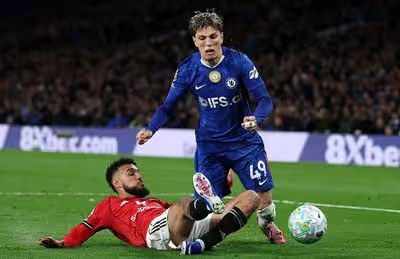
Match snapshot: quiet cameo, costly defeat
Garnacho replaced Estevao early and saw out the remainder of the match, but created no clear chances and coughed up possession at pivotal moments. Chelsea’s attacks broke down too often on his side, and the Blues lacked the cutting edge to overturn a single-goal deficit. For a player who cost significantly to acquire, the mismatch between expectation and output is stark.
Half-time tensions and squad dynamics
Reports of teammates confronting Garnacho at half-time underline a deeper issue than one poor display. Dressing-room dissatisfaction — whether blunt words or a firm pep talk — is notable because it suggests frustrations have been simmering. Club statements insist no individual was singled out. Still, visible unrest risks undermining cohesion, especially when a high-profile signing struggles to justify his price and minutes.
Context: a turbulent exit from his former club and a difficult start
Garnacho’s move last summer was framed by a messy split from his previous club and a marginalised pre-season status that persisted into this campaign. He has managed just one Premier League goal this season, a poor return for a forward expected to add dynamism and end-product. That backdrop makes every underwhelming outing feel magnified inside the squad and among supporters.
Why this matters for Chelsea and the player
This episode matters on three levels: immediate match impact, dressing-room morale, and long-term squad planning. On the pitch, Chelsea need consistent attacking returns to climb the table. Off it, unresolved tensions can corrode trust between players and between the dressing room and coaching staff. For Garnacho personally, confidence and technical sharpness are now under the microscope — how he responds will shape whether he becomes a central figure or a short-term misfire.
What could happen next
Practical steps are clear: coaching staff must either recommit to a plan that plays to Garnacho’s strengths or adjust roles to protect team balance. The player needs a period of focused work to rebuild confidence and decision-making in tight spaces. If performances don’t improve, summer conversations about his future will inevitably intensify — but for now the priority for Chelsea should be containment and corrective coaching rather than headline-grabbing exits.
Bottom line
Garnacho’s quiet game and the reported half-time confrontation are symptomatic of a broader recruitment and integration challenge at Chelsea. The club now faces a choice: invest time and tactical support to unlock a young talent, or accept a costly gamble that has yet to pay off.
Liverpool offered blockbuster deal for Real Madrid star Vinicius Jr
How the next few weeks are handled will tell us whether this is a temporary stumble or the beginning of a longer decline for a high-profile signing.
 Yahoo! News


