


Bayern chiefs have publicly called for scrapping Germany’s 50+1 rule, hinting at more freedom for external investment. For bettors, this raises the prospect of Bayern strengthening commercially and remaining favorites — consider long-term Bayern title bets or markets that react to increased investor influence, while also watching odds for rule-change proposals or shifts in competitive balance across the Bundesliga.
Bayern Officials Ramp Up Pressure to Abolish 50+1 Rule
Bayern Munich president Herbert Hainer and CEO Jan-Christian Dreesen have openly advocated removing the 50+1 rule, arguing that clubs should be free to decide their own ownership structures. Their statements mark a clear signal that Bayern is positioning itself to press for reform that could reshape German football’s governance and commercial landscape.
What Is the 50+1 Rule?
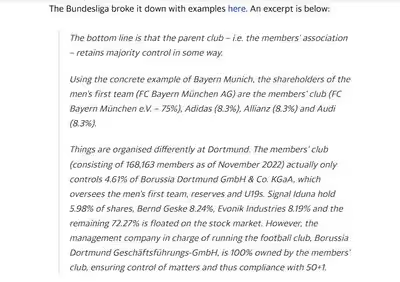
The 50+1 rule requires that the parent club — the registered members’ association — retain at least 50% plus one voting share of the professional football entity. That “+1” guarantees majority decision-making power and was introduced to prevent full takeovers by private investors, protect clubs from reckless financial speculation, preserve fan influence, and maintain competitive integrity.
How the Rule Operates in Practice
Different clubs comply with the rule in varying ways. Bayern’s men’s first team company shows the members’ club holding the majority of shares alongside commercial partners. Borussia Dortmund’s corporate structure has large floated shareholdings but a management company fully owned by the members’ club ensures control that aligns with 50+1 requirements. Other clubs have found alternative arrangements to balance investment and member influence.
Exemptions and Workarounds
There are notable exceptions: Bayer Leverkusen and VfL Wolfsburg are historically linked to long-standing corporate founders and have special statuses. RB Leipzig has effectively navigated the rule by creating a small membership base closely tied to its corporate backers. These cases demonstrate the rule’s complexity and how legacy relationships or structural workarounds can permit significant outside influence.
Why Bayern Wants Change — The Club’s Argument
Bayern’s leadership argues that loosening the rule would foster a stronger, more competitive Bundesliga by allowing clubs greater access to investment and commercial partnerships. Executives say that enabling clubs to decide their ownership model could keep top German clubs motivated to invest and innovate, arguing it’s necessary for maintaining competitiveness domestically and in Europe.
Fan Backlash and Cultural Stakes
Any move to alter 50+1 will confront deep-rooted fan resistance. German football culture emphasizes member ownership and fan influence; supporters often view the rule as a protector of traditions and local identity. Proposals to dilute member control can provoke strong pushback from fan groups and could spur protests or political debates.
Implications for Betting Markets and Punters
If reforms gain traction, betting markets could shift:
- Short-term: Odds on Bayern maintaining domestic dominance might shorten as increased investment and commercial freedom bolster the club’s resources.
- Long-term: Markets for Champions League performance and title futures could react to perceived competitive imbalances.
- Governance markets: Wagers on whether the 50+1 rule will be amended or on which clubs might change ownership status could see increased activity.
Punters should monitor official developments and club statements closely and consider hedging — regulatory changes can be slow and contested, so outcomes remain uncertain.
Where This Leaves the Bundesliga
Bayern’s stance adds momentum to an already sensitive debate about modernising German football’s financial model.
Any concrete push to amend 50+1 would involve clubs, fans, the league and political stakeholders.
Kompany gives update on Neuer and Kane
The outcome will shape transfer strategies, investor appetite and competitive dynamics across the Bundesliga for years to come.
 Yahoo! News


