


Luka Modric appears to be closing the curtain on his playing career after one season at AC Milan, teasing a possible return to Real Madrid in a directorial capacity. The 40-year-old midfielder posted a heartfelt message to Milan fans and an image with Real Madrid president Florentino Pérez, fueling talk that Modric could swap the San Siro for an executive role as he nears retirement.
Luka Modric signals end of his Milan chapter and a potential Madrid return
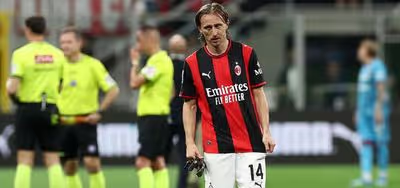
Luka Modric’s first season at AC Milan has ended with a clear emotional coda: public gestures that suggest his time on the pitch may be winding down and his next chapter could be off it, back at Real Madrid. The Croat, who turns 41 in September, thanked Milan supporters on Instagram and shared imagery linking him with Real Madrid president Florentino Pérez, prompting speculation about a move into a director role.
Season in review: still influential, but age is a factor
Modric arrived at San Siro last summer as a free agent and proved he could still influence games at the highest level. He finished the campaign with two goals and three assists across 37 competitive appearances, demonstrating craft and intelligence rather than raw legs.
A facial fracture sustained in a head clash with Manuel Locatelli interrupted his rhythm and highlighted the physical risk for a veteran campaigner. That injury, combined with his approaching 41st birthday, forces an honest evaluation of longevity.
Social media gestures that carry weight
The Instagram thank-you to Milan fans carried the tone of a farewell rather than a simple season-end note. Equally striking was an Instagram Story showing Modric embracing Pérez with two white hearts — a visual shorthand easily interpreted as a rekindling of Real Madrid ties. These moves are subtle but decisive for a player who has always managed his narrative carefully.
Why a return to Real Madrid as a director makes sense
Modric’s potential switch to a director role would be logical on several fronts. He understands Real Madrid’s culture, footballing philosophy and dressing-room dynamics after 13 trophy-laden years.
His reputation, football IQ and relationships across Europe would make him a valuable bridge between the sporting and executive sides of a top club.
For Real Madrid, acquiring someone with Modric’s on-field credibility could help with player liaison, scouting insight and maintaining continuity of club identity — areas clubs increasingly prize in post-playing appointments.
Coaching, mentorship or succession planning?
A director role would suit Modric’s profile if he prefers strategic influence over day-to-day coaching. He has long been a cerebral player — the sort who translates neatly to advisory and developmental duties. That path also preserves Modric’s legacy at Madrid, allowing him to shape the club without the physical toll of playing.
Implications for AC Milan and Serie A
Milan will lose more than a midfielder if Modric departs. Beyond his output, he provided elite-level experience, composure in tight games and a public profile that amplified Milan’s summer signing narrative. Replacing that blend of craft and leadership is challenging, particularly on a limited budget or within tight transfer windows.
Serie A benefits when players of Modric’s caliber participate; his likely exit would be a reputational and competitive hit for the league, though it would also open minutes for younger midfielders to accelerate their development.
What happens next?
Modric faces three clear paths: extend his playing career at Milan or elsewhere for another season, retire and transition into a non-playing role — potentially at Real Madrid — or explore coaching/directorial options outside Madrid.
Each choice carries trade-offs between legacy, immediate influence and long-term security. Any definitive move will be announced on his timeline. Until then, his social cues and season-ending gestures offer the strongest indication that his most impactful contributions may soon move from the pitch to the boardroom.
 Yahoo! News


