


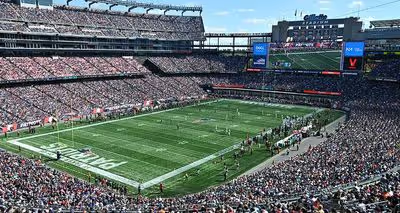
Gillette Stadium will be listed as "Boston Stadium" for the 2026 World Cup after FIFA bars corporate venue names; the Foxborough facility — home to the New England Patriots and New England Revolution — is scheduled to host seven tournament matches between June 13 and July 9.
Gillette becomes "Boston Stadium" for World Cup 2026
Gillette Stadium in Foxborough will be officially billed as "Boston Stadium" during the 2026 FIFA World Cup, reflecting FIFA's long-standing rule against using corporate naming rights in tournament materials. The venue, which seats roughly 66,000 for football and stages major concerts and MLS fixtures, will host seven matches across the tournament window.
Why FIFA forces name changes
FIFA requires tournament venues to appear under noncommercial names to protect event sponsors and maintain unified branding. That means familiar corporate-branded stadiums nationwide will be referred to by city or regional labels in broadcasts, schedules and official signage.
What the rebrand means for fans and local stakeholders
The change is cosmetic for competition logistics but meaningful for marketing and perception. Locals will still call it Gillette, and on-site sponsorship activations will remain; however, global audiences will see "Boston Stadium" in TV graphics and official programs. For host cities, the label can simplify messaging for casual viewers but risks erasing local identity tied to long-term venue partners.
How this fits the pattern across U.S. venues
Many U.S. World Cup host sites will follow the same practice, adopting generic names in tournament materials. The trend highlights the tension between municipal branding, corporate rights holders and the global marketing architecture of FIFA tournaments.
Boston Stadium — Gillette Stadium (Foxborough)
Home teams: New England Patriots (NFL), New England Revolution (MLS). Notable: Foxborough sits outside Boston proper but will carry the Boston label for global clarity and broadcast simplicity.
Atlanta Stadium — Mercedes‑Benz Stadium (Atlanta)
Home teams: Atlanta Falcons (NFL), Atlanta United FC (MLS). Notable: A modern multipurpose venue that elevates the tournament’s southern footprint.
Dallas Stadium — AT&T Stadium (Arlington)
Home team: Dallas Cowboys (NFL). Notable: A high-capacity, indoor venue that will be a focal point for large matches.
Houston Stadium — NRG Stadium (Houston)
Home team: Houston Texans (NFL). Notable: Retractable-roof venue with experience hosting major international events.
Kansas City Stadium — Arrowhead Stadium (Kansas City)
Home team: Kansas City Chiefs (NFL). Notable: A soccer-friendly, football-rooted atmosphere expected to deliver intense home-field energy.
Los Angeles Stadium — SoFi Stadium (Inglewood)
Home teams: Los Angeles Rams, Los Angeles Chargers (NFL). Notable: One of the most high-profile venues in the tournament, with elite broadcast infrastructure.
Miami Stadium — Hard Rock Stadium (Miami Gardens)
Home teams: Miami Dolphins (NFL), Miami Hurricanes (college). Notable: A warm-weather venue with strong tourism synergies for international visitors.
New York/New Jersey Stadium — MetLife Stadium (East Rutherford)
Home teams: New York Giants, New York Jets (NFL). Notable: Gateway market for international fans arriving through major Northeast airports.
Philadelphia Stadium — Lincoln Financial Field (Philadelphia)
Home team: Philadelphia Eagles (NFL). Notable: Passionate local support expected to create a raucous matchday vibe.
San Francisco Bay Area Stadium — Levi's Stadium (Santa Clara)
Home teams: San Francisco 49ers (NFL), San Jose Earthquakes (MLS). Notable: Tech-region backdrop and experience with big-profile soccer events.
Seattle Stadium — Lumen Field (Seattle)
Home teams: Seattle Seahawks (NFL), Seattle Sounders FC (MLS). Notable: One of the loudest soccer atmospheres in the U.S., a proven World Cup-style venue.
Looking ahead: practical and branding implications
The temporary rebranding won't alter match assignments, pitch conditions or local planning, but it will shape how international audiences perceive U.S. host cities. For teams and organizers, the focus remains on logistics, crowd management and atmosphere; for sponsors and naming-rights holders, the tournament is a reminder that global events can temporarily supersede commercial identity.
Wrexham just missed out on a place in the Championship playoffs
Expect clear, consistent usage of the generic names in all FIFA communications, with on-the-ground signage and local promotions filling in the familiar corporate labels for arriving fans.
 Yahoo! News


