


Several outsiders arrive at the World Cup with realistic quarterfinal ambitions—Colombia, Ecuador, Senegal, Japan, Switzerland and Türkiye headline a list of dark horses. Host nations United States, Mexico and Canada also carry heightened expectations. Tactical balance, top-level club talent and favorable draws mean a single tactical tweak or fitness swing could convert one of these surprise runs into a historic tournament story.
World Cup sleepers and dark horses to watch
The 2026 World Cup draw opens a genuine window for nontraditional powers to make deep runs. A mix of defensive solidity, elite attackers and favorable group paths puts Colombia, Ecuador, Senegal, Japan, Switzerland and Türkiye in the spotlight, while host nations United States, Mexico and Canada face clear pressure to capitalize on home advantage.
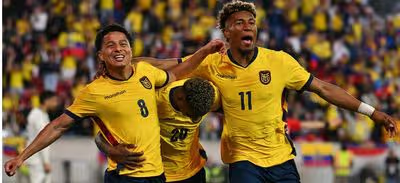
Colombia — high-end attacking upside
Colombia pairs explosive wing play with a midfield playmaker who can unlock defenses. Luis Díaz’s ability to cut inside and James Rodríguez’s vision give Los Cafeteros match‑winning moments. If Colombia tops a competitive group and avoids a heavyweight in the round of 16, a quarterfinal berth looks well within reach.
Ecuador — defensive spine, rising credibility
Ecuador’s strength begins in a backline stocked with top European pros and a midfield anchored by Moisés Caicedo. That defensive spine creates a low‑variance platform; add a reliable finisher and La Tri becomes dangerous in knockout football. A cautious but compact Ecuador could turn a tight draw into a surprise quarterfinal appearance.
Senegal — experience plus pace on the counter
Senegal blends World Cup‑tested leaders with a lethal counterattacking template. Sadio Mané still evokes instant threat, and a resolute backline gives coach Pape Thiaw a clear identity. Against possession teams that overcommit, Senegal’s transition game can punish mistakes and carry them deep.
Japan — tactical discipline and European personnel
Japan remains one of the best coached teams outside the heavyweights, with players comfortable in high‑tempo pressing systems. European club experience supplies technical control and stamina, enabling Japan to handle congested fixtures and create upsets. If they win their group, the path to the quarters opens considerably.
Switzerland — consistency and a favorable draw
Switzerland’s recent record of deep tournament runs isn’t flashy but it’s reliable. Cohesion, continuity and experience across multiple World Cups make the Swiss hard to dislodge in knockout ties. Drawn with comparatively softer opposition, they have a realistic blueprint to reach the quarters for the first time since 1954.
Türkiye — youthful creativity, improving consistency
Türkiye brings a blend of prodigious young creators and renewed tactical discipline. When their young duo clicks with a structured midfield, the Turks can carve open defenses. Consistency will be the question, but their EURO run and recent results suggest they won’t be easy opponents.
United States — host pressure, attacking depth
As co-hosts, the U.S. must be considered more than a sentimental pick. A dynamic attack led by Christian Pulisic and options at center forward gives tactical flexibility. Home crowds and a manageable group could propel the U.S. into knockout stages where momentum and crowd energy matter.
Mexico — talent, environment, and youthful spark
Mexico’s roster blends veteran finishers with exciting youth, and playing at home — in heat and altitude — is a tangible advantage. If injuries settle and the coach harnesses the young midfield talent, El Tri can match historical host performances and push toward the quarterfinals.
Canada — contingent on fitness and form
Canada’s ceiling depends heavily on the availability and form of key players like Alphonso Davies. With decisive wide outlets and a solid central duo, the hosts can be dangerous on the break. Health and tactical discipline will determine whether Canada exploits home advantage into a deep run.
Why this matters — implications for the tournament
A spread of credible dark horses shifts tournament dynamics: favorites will face more tactical variety, and knockout draws become less predictable. Teams that combine defensive structure with a reliable creator and a clinical forward are best positioned to overachieve. For organizers and broadcasters, surprise runs ignite narratives; for rivals, they demand sharper game‑planning.
What to watch
- Group draws and the timing of knockout matchups — a favorable bracket changes reasonable ambitions into realistic targets.
- Fitness and form of key internationals tied to European seasons; marginal absences swing outcomes.
- Tactical flexibility: teams that can switch between low block and pressing counterattack will cause the most upsets.
The World Cup’s history of Cinderella teams proves one consistent truth: balance and game management often trump star power alone.
Liverpool To Make 5 Signings and 4 Sales Under Andoni Iraola
These nine nations each possess at least one ingredient that can turn them from outsiders into headline makers.
 Yahoo! News


