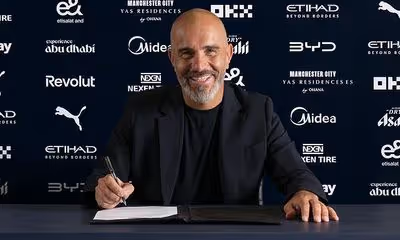
Enzo Maresca has been confirmed as Manchester City's new head coach on a three-year contract, replacing Pep Guardiola. The Italian returns to the Etihad for a third spell after his January exit from Chelsea, with clubs agreeing a reported £17m compensation. City have opted for continuity and internal culture fit as they aim to restore Premier League dominance and sustain their playing identity.
Enzo Maresca named Manchester City head coach — key details
Enzo Maresca joins Manchester City on a three-year deal to succeed Pep Guardiola, who left after a decade of unparalleled success. City and Chelsea are reported to have agreed a compensation package in the region of £17m following Maresca’s departure from Stamford Bridge in January.
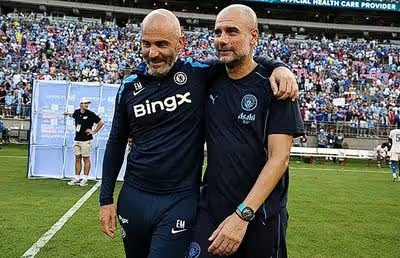
Khaldoon Al Mubarak praised Maresca’s alignment with the club’s ambitions and described the appointment as a “natural next step.” The move reunites Maresca with an organisation he already knows intimately from two previous spells at the Etihad.
Why City chose Maresca: continuity, culture and coaching DNA
City’s decision prioritises continuity over a radical reset. Maresca brings tactical familiarity with Guardiola’s methods and an organisational understanding built during his time as Elite Development Squad coach and as an assistant at Manchester City.
That inside knowledge reduces transition risk. City inherit a manager who understands the club’s recruitment model, the demands of the squad and the expectation to play possession-oriented, high-pressing football — all key to preserving the club’s identity post-Guardiola.
Coaching résumé and where Maresca fits
Maresca’s CV is mixed: success at youth and assistant level and a short, turbulent stint at Chelsea ended in January. His greatest selling point at City is his thorough familiarity with the club’s structures and youth pathway, combined with an appetite to stamp his own tactical nuances on an elite squad.
This appointment signals that City value institutional fit and developmental continuity as much as headline managerial experience.
Compensation row with Chelsea — what happened and why it matters
Chelsea viewed Maresca’s exit as abrupt and sought financial redress, arguing the manager engaged with City while still under contract. City and Chelsea subsequently settled on a reported fee of about £17m to resolve the dispute.
Beyond the headline number, the episode underscores the tensions of managerial movement mid-season and the premium placed on someone perceived to be ready to lead a title-challenging squad immediately.
Immediate priorities: squad management, staff, and expectations
Maresca’s first tasks will be stabilising the dressing room, cementing his senior coaching team and overseeing a summer preparation that sets the tone for his tenure. He inherits a squad assembled for Guardiola’s philosophies but adaptable to fresh ideas.
Expect scrutiny around his choices for tactical tweaks, rotation policy and how he handles high-profile players used to Guardiola’s regimen. Success will be measured quickly: reclaiming the Premier League and deep runs in European competition remain the club’s non-negotiables.
Preseason and transfer implications
A swift, cohesive preseason will be critical. Maresca’s knowledge of City’s recruitment strategy should smooth transition conversations with sporting directors and scouts, but any significant tactical shift could trigger targeted transfer business.
City’s elite resources mean Maresca will be well-supported, yet the squad’s short-term harmony and response to his voice will dictate early season results.
Legacy and pressure: filling Guardiola’s shoes
Replacing Guardiola is less about mimicking him than about sustaining excellence. Maresca inherits sky-high expectations: domestic titles, European competitiveness and the continuation of an attractive playing style.
This appointment reads as a pragmatic gamble — favouring structural continuity and internal alignment over a marquee external name. If Maresca successfully blends evolution with the established City model, he can justify the club’s confidence; if not, patience will be limited in a results-driven environment.
What could come next
Short term: Maresca will finalise his coaching staff, outline preseason plans and address media narratives around the Chelsea settlement and managerial succession.
Medium term: form in the opening months will define whether City regain the Premier League summit and how the squad responds to tactical adjustments.
Alonso prioritises Xhaka and four former proteges to reshape Chelsea's squad
Longer term: success will hinge on Maresca’s ability to imprint his identity without disrupting the structures that made City dominant — a delicate balance between continuity and necessary innovation.
 Mail Online