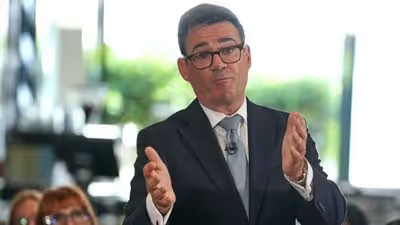
UK Prime Minister Andy Burnham has called for FIFA president Gianni Infantino to resign after proposals to sell stakes in the World Cup to private equity provoked widespread rejection from UEFA, Concacaf and the AFC, a united boycott threat from all 55 UEFA members, and the resignation of a senior FIFA adviser — intensifying a governance crisis that now threatens World Cup credibility.
Burnham demands Infantino resign as World Cup sale plan provokes revolt
Andy Burnham's public call for Gianni Infantino to step down crystallises political and sporting fury over FIFA’s reported plan to sell stakes in the World Cup to private investors.
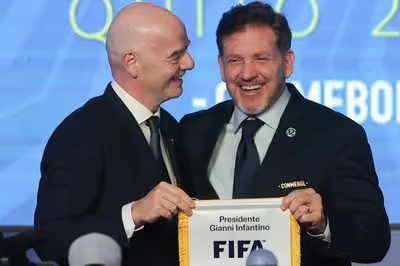
The UK prime minister branded the idea “outrageous,” arguing football belongs to supporters rather than financiers, and became the first major national leader to demand Infantino’s resignation.
Confederations unite: UEFA, Concacaf and AFC reject the proposal
UEFA’s 55 member nations have agreed to boycott FIFA competitions while the proposal remains on the table, a move that would sideline top teams — including England, Germany, France and Spain — from future World Cups if implemented. Concacaf and the Asian Football Confederation (AFC) also publicly rejected the plan, creating an unprecedented alignment of regional bodies against FIFA policy.
Senior adviser resigns in protest
Carlos Cordeiro, a senior FIFA adviser and former U.S. Soccer president, resigned in protest, saying he could not stand by while FIFA considered selling a stake in the World Cup. His departure is one of the clearest signs of internal dissent and adds weight to external pressure from national leaders and confederations.
What this means for FIFA and the World Cup
The controversy exposes a governance crossroads for FIFA. Selling equity in the World Cup would reshape the tournament’s financial model and public perception, potentially handing influential commercial actors control over scheduling, rights and the competition’s future format. The backlash suggests stakeholders view that as an existential threat to football’s communal identity.
Competitive and commercial risks
A boycott by UEFA members would drastically undermine the World Cup’s sporting legitimacy and commercial value, paradoxically reducing the asset any investor might want to buy into. Top national teams and star players could be absent, broadcasters might balk, and sponsors would face reputational and financial risk — increasing the likelihood FIFA will need to backtrack or significantly alter its proposal.
Political pressure raises the stakes
When a sitting prime minister intervenes, the dispute moves beyond sport into national politics. Burnham’s statement reflects broader public sentiment that football is a public good, not merely a commoditised property. That political dimension amplifies the reputational cost for FIFA and makes a quick resolution more complicated.
Next steps: governance, reviews and possible outcomes
FIFA faces several immediate choices: pause the investment proposal, open independent governance and legal reviews, or press ahead and risk deeper fragmentation. Expect urgent meetings between FIFA, confederations and member associations, and potential calls for independent inquiries into decision-making. Infantino’s capacity to navigate this crisis will determine whether the organisation can restore trust or enter a prolonged period of turmoil.
Why this matters to fans and the future of football
At stake is more than money: it’s the perceived ownership of the game. Fans, clubs and national associations view the World Cup as the sport’s pinnacle — a shared cultural event. Turning that asset into a privately traded commodity would redraw power lines in world football and could accelerate tensions between commercial ambitions and sporting integrity.
Analyst view: Infantino’s leadership under real test
This episode tests Infantino’s judgment and political capital. Proposals that alienate the sport’s governing confederations and prompt political intervention suggest a leadership miscalculation.
Five contenders emerge as Infantino faces FIFA governance crisis
Restoring consensus will require transparent dialogue, credible governance reforms and tangible safeguards to reassure fans and federations that the World Cup remains a public sporting institution, not a private investment vehicle.
 Espn Australia