As the 2026 FIFA World Cup begins, the Golden Ball race is already shaping into a duel between seasoned superstars and high-ceiling youngsters. Veterans like Lionel Messi, Kylian Mbappé and Harry Kane enter with proven tournament pedigree, while breakout talents such as Lamine Yamal and Vinícius Júnior could redefine narratives if they stay healthy and influential in key moments.
Golden Ball at the 2026 World Cup — the early landscape
The Golden Ball will reward the tournament’s most influential performer, and early storylines favor a mix of experience and explosive youth. Established leaders carry expectation and team structures built around them; rising stars offer game-changing moments that tilt knockout ties. Fitness, tactical fit and the depth of each nation’s squad will determine who emerges as the true frontrunner.
Why these names matter
Short tournaments magnify influence. A forward scoring in Group Stage and delivering again in the knockouts becomes the headline pick. Midfield maestros who control tempo and supply decisive assists are equally valued. The next few matches will separate flukes from contenders — coaches’ choices and how teams use their stars under pressure will be decisive.
Top contenders
Lionel Messi — Argentina
Messi arrives with recent World Cup pedigree: seven goals and three assists in 2022 backed by a leadership role that reshaped Argentina’s attack. His blend of chance creation and cold-blooded finishing remains unique, and his presence forces opponents to allocate two or three defenders to contain him — creating space for teammates. If Argentina progress deep and Messi remains the focal point, his case for another Golden Ball is straightforward.
Kylian Mbappé — France
Mbappé brings pace, penalty-box opportunism and tournament experience that turned 2022 into a personal showcase. His ability to decide games on the counter and convert high-volume chances keeps him among the elite. France’s system offers him freedom; a run of goals and clutch performances would vault him into Golden Ball contention again.
Harry Kane — England
Kane’s intelligence as a forward — dropping to craft, finishing inside the box — makes him a dual threat. He combines goal-scoring with playmaking, often dragging defenders out of position to unlock teammates. For Kane, consistent scoring through both group and knockout stages, plus involvement in build play, will be the deciding factors that elevate him above other forwards.
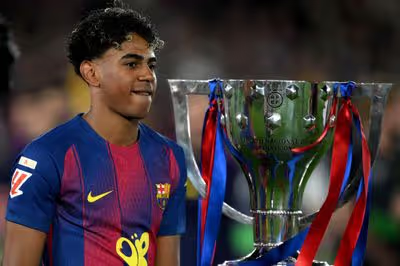
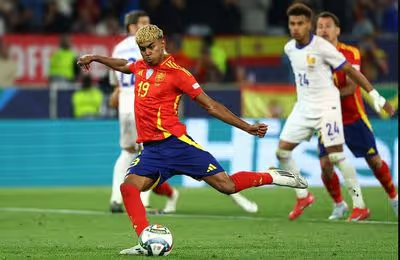
Lamine Yamal — Spain
Yamal is the archetype of a modern breakout star: elite dribbling, high assist potential and an increasing goal threat. Fitness is the immediate concern after a hamstring issue, but Spain’s setup can maximize his one-on-one danger even with reduced minutes. If he returns fully fit, Yamal’s capacity to destabilize defenses and rack up assists makes him a genuine dark-horse Golden Ball candidate.
Vinícius Júnior — Brazil
Vinícius enters with club-level brilliance but a mixed international output to date. With Neymar past his peak for the Seleção, Vinícius is positioned to be Brazil’s primary attacking fulcrum. Tactical tweaks under new management that encourage him to attack centrally could unlock a more direct scoring output. A tournament in which he scores and frequently decides tight matches would recast his legacy on the international stage.
Luis Díaz — Colombia
Díaz’s recent club form and knack for big-game contributions make him a long-shot to steal headlines. He thrives in moments that require directness and has the speed to punish transitional defense. For Díaz to contend, Colombia must progress beyond the group phase, and he must be a consistent match-winner rather than a sporadic spark.
Context: past winners and tournament patterns
Golden Ball winners often come from teams that reach at least the semifinals; impact across multiple rounds matters more than a short burst. Lionel Messi’s 2014 and 2022 performances underline how sustained influence — goals, assists and leadership — is rewarded. Conversely, players who flash early but disappear in knockout football rarely win the trophy.
What this means and what to watch next
Expect the Golden Ball race to evolve quickly: group-stage dominance can create frontrunners, but knockout-stage heroics usually seal the award. Monitor injury updates (notably Yamal), managerial tactics that centralize or diversify attacks, and which players shoulder responsibility in decisive matches. The ultimate winner will blend consistent statistical output with game-defining moments in the tournament’s highest-pressure fixtures.
Bottom line
This World Cup’s Golden Ball contest is a study in contrast: proven veterans with track records versus young talents with sky-high ceilings.
Who will win the World Cup 2026? This algorithm has a clear favorite
Early form will set narratives, but stamina, adaptability and clutch performances in the knockouts will determine who writes the tournament’s lasting script.
 New York Post