The Indianapolis Colts have completed a defining roster move, sending six-time All-Pro guard Quenton Nelson to the Seattle Seahawks as the franchise pivots into a formal rebuilding phase.
Details of the Nelson-to-Seahawks deal
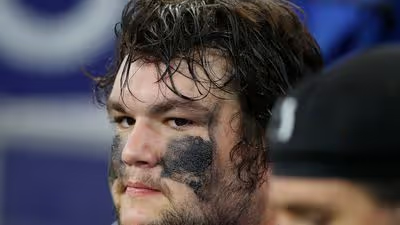
The trade moves one of the league’s premier interior linemen to Seattle and returns draft capital to Indianapolis. The Seahawks will send a 2027 third-round pick and a 2028 fifth-round pick to the Colts in the Nelson deal, a transaction that closes a chapter on Nelson’s time in Indianapolis.
Nelson, a high-impact entrant to the NFL as the sixth-overall pick in 2018, earned first-team All-Pro honors in each of his first three seasons and has been repeatedly recognized among the league’s best with multiple All-Pro nods and Pro Bowl selections. He is also in the final year of his contract.
Immediate salary-cap and draft implications

The Nelson trade comes with clear financial benefits that shift the Colts’ short-term operating picture. Tom Pelissero noted that parting ways with Nelson and DeForest Buckner freed more than $17.7 million in salary-cap room for the 2026 season, Yahoo! News reported, immediately enlarging the team’s flexibility.
That boost is part of a wider picture: Over the Cap lists Indianapolis with $37.26 million in available cap space — the most of any team in the NFL, Yahoo! News reported. Looking further ahead, Spotrac projects the Colts will have roughly $97.84 million in available cap space for 2027, a figure that would rank fifth-most in the league and provide the front office significant maneuvering room, Yahoo! News noted.
On the draft front, the incoming mid-round selections give Indianapolis assets as the team transitions into a rebuild; the Seahawks will send a 2027 third-round pick and a 2028 fifth-round pick to the Colts in the Nelson trade.
How the move fits the Indianapolis Colts' rebuild
The trade of Nelson marks a decisive turning point in the Colts’ season. What began as an attempt to contend earlier in the year has shifted into an organized rebuild, Sports Illustrated reported, and the Nelson trade is the clearest signal yet.
Front-office changes preceded the roster move: the Colts entered this phase after firing general manager Chris Ballard, a change that has accelerated conversations about long-term restructuring. Moving Nelson — one of the organization’s longest-tenured and most decorated players — signals that new decision-makers are prioritizing cap flexibility, draft capital and multi-year roster construction over short-term retention of proven veterans.
For a franchise recalibrating its timeline, the combination of added cap space and mid-round picks creates a practical runway. The near-term salary relief opens possibilities for targeted free-agent signings, contract extensions for younger core pieces, or further trades that convert assets into controllable talent. The projected 2027 cap cushion, if realized, would give the next general manager room to pursue larger moves when the market reopens.
At the same time, parting with an elite, established player like Nelson carries costs on the field. Indianapolis will need to replace a rare blend of elite-level consistency and early-career dominance along its offensive line, whether by promoting internally, drafting a successor or reshuffling protection schemes. The trade therefore represents a clear trade-off: short-term downgrade at a premium position in exchange for long-term roster and financial flexibility.
Seattle Seahawks' role and what the Colts gained
The Seattle Seahawks emerge as the acquiring club, adding a multiple-time All-Pro to shore up their interior line. For Indianapolis, the returned draft capital — including the 2027 third-round and 2028 fifth-round picks — plus the immediate cap relief, are tangible building blocks for a rebuild that has already been set in motion.
Ultimately, the Nelson trade formalizes a strategic reset for the Indianapolis Colts. The package of picks and added cap room provides the framework for reconstruction; how the front office deploys those resources will determine whether this move becomes the foundation of a successful rebuild or a stopgap that delays a return to contention. For now, the Colts have chosen capitalization and flexibility as their guiding principle.