The Dallas Cowboys completed a high-profile trade for cornerback Joey Porter Jr. before Week 4, shipping a 2027 sixth-round pick and a 2028 second-round pick to the Pittsburgh Steelers to acquire the former first-rounder.
Trade details and Dallas’ urgency
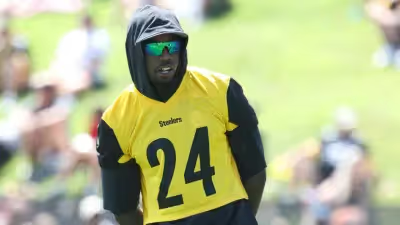
The move arrives as Dallas seeks to arrest a slide early in the season. The Cowboys executed the deal prior to Week 4 and paid the draft capital of a 2028 second-rounder and a 2027 sixth-rounder to land Porter.
The timing underscored a sense of urgency from the Cowboys’ front office to bolster a defense that needed immediate help. Sporting News called the deal an aggressive swing aimed at avoiding a 1-3 start and projected that Dallas had landed a quality cornerback who should be a notable upgrade for their secondary this season.
Porter’s presence in Dallas is now official; the Cowboys added him to their roster this week, giving them a proven boundary option with starting experience at the NFL level.
What Joey Porter Jr. offers the Cowboys

Porter arrives having established himself as a starting cornerback and should provide an immediate physical presence and coverage versatility on the perimeter. Sporting News projected that Porter will be a meaningful help to Dallas’ defense this season, a rationale consistent with the Cowboys’ willingness to part with mid-round draft capital to accelerate a defensive upgrade.
The Cowboys’ decision reflects a win-now posture: trading future middle-round picks for a player who can impact matchups immediately rather than waiting on draft development. That approach pressures the Cowboys to integrate Porter quickly and get immediate returns on their investment.
It’s worth noting that the wider contract picture around Porter remains a matter of outside reporting: Yahoo! News observed that the Cowboys did not have an extension in place when they traded for Porter and suggested he still might not receive the long-term deal he sought from Pittsburgh. That characterization reflects reporting and projections about negotiations rather than an official team declaration.
How the Steelers are affected
Pittsburgh parts with one of its youngest building blocks at cornerback. Newsweek confirmed the Cowboys acquired Porter in the swap, and the Steelers must now absorb the roster and strategic consequences of losing a player who had emerged as a starter in recent seasons.
Yahoo! News framed the transaction in the context of a months-long contract saga, noting Porter’s limited participation during the offseason and early regular season. That reporting suggested his reduced availability was a factor in the decision to move him, and observers have characterized portions of that timeline as a contract-related standoff rather than typical injury management.
Yahoo! News also raised concern about Pittsburgh’s depth at corner, writing that the Steelers look thin in the secondary and are now without a promising cornerback in a season when adding young contributors would appear to be a priority. That assessment is presented as analysis and opinion from outside reporting rather than a formal statement from the club.
For Pittsburgh, the trade converts a young starter into draft capital that can be used to address multiple needs, but it also creates an immediate gap in perimeter coverage. How the Steelers replace snaps and veteran presence on the boundary will determine whether this trade is ultimately judged as prudent asset management or a painful talent drain.
Balancing short-term gain and long-term cost
The Cowboys’ price — a 2027 sixth-round pick and a 2028 second-round pick — signals a willingness to sacrifice longer-term draft flexibility for immediate reinforcement. Sporting News characterized the move as a big trade meant to help avert an early-season hole in Dallas’ playoff outlook, while projecting positive, near-term returns for the defense.
From Pittsburgh’s perspective, the compensation buys time and resources, but the timing and the loss of a young starter introduce risk, particularly if the team’s secondary struggles in the weeks ahead. Yahoo! News’ coverage framed the departure of Porter within a larger narrative about contract negotiations and the rising value of cornerbacks this offseason, suggesting Pittsburgh’s decision was influenced by market dynamics as much as roster construction.
Either way, the trade shifts the balance of both teams’ rosters immediately: Dallas gains a starting-caliber corner with the potential to stabilize its defensive matchups now; the Steelers receive future draft capital while surrendering a developing piece of their defensive foundation.
How quickly Porter is integrated in Dallas, and how effectively Pittsburgh replaces his snaps, will determine whether this trade is a turning point this season — or the opening chapter of a larger roster reset for both clubs.