Dallas County Judge Martin Hoffman issued a 14-day temporary restraining order that bars the NCAA, the Southeastern Conference and Commissioner Greg Sankey from blocking 41 athletes from returning to Division I competition for the 2026–27 season, restraining the organizations from using eligibility rules to exclude the plaintiffs on the basis that they have already competed four seasons.
What the order says
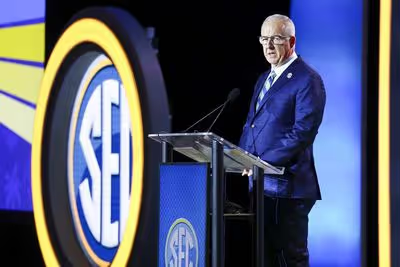
Hoffman’s order centers on the question of whether the affected athletes would have remained eligible had they been granted a fifth season. The judge restrained the NCAA and SEC from using eligibility rules to keep the plaintiffs out on the grounds that they have already competed four seasons, and wrote that "as long as they would have been eligible the following semester with a fifth year, they are eligible today."
The order explicitly bars the NCAA and the SEC from enforcing rules that would deny the 41 plaintiffs Division I participation during the 2026-27 season on the basis of having exhausted four seasons.
Hoodline reported that the order also requires the NCAA to temporarily reopen the transfer portal for one week so the affected athletes can pursue new roster opportunities.
Legal and regulatory backdrop
In June, Division I adopted an age-based 5-in-5 eligibility framework that gives incoming athletes five seasons of competition within a five-year window starting at age 19, but it explicitly left out high school graduates from the Class of 2022, whose four-year eligibility had already expired.
The plaintiffs challenged the application of eligibility limits to certain athletes; the judge wrote that if they would have been eligible the following semester with a fifth year, they are eligible today, and his order restrains the NCAA and SEC from using eligibility rules to keep the plaintiffs out on the grounds they already competed four seasons.
Immediate implications
Practically, the restraining order means the NCAA and the SEC cannot rely on Bylaw 12.6 or similar rules to bar these 41 individuals from playing this coming season while the temporary order remains in place. The 14-day window gives the plaintiffs limited time to secure roster spots and preserves their ability to compete while the litigation proceeds.
Hoodline’s reporting that the transfer portal must be reopened for a week would create a short, focused opportunity for the affected athletes to place themselves with new programs, but that relief is temporary and tied directly to the scope of the restraining order.
The order does not resolve the broader legal dispute over the implementation of the 5-in-5 framework or the NCAA’s eligibility rules; it restrains enforcement only for the plaintiffs named and for the duration specified.
Next steps
The temporary restraining order will remain in effect for 14 days unless the court modifies it or the parties reach a different agreement. The ruling preserves the plaintiffs’ ability to compete while the case moves forward, and it forces the NCAA to take immediate administrative steps if the transfer-portal relief stands.
How the NCAA and the SEC respond procedurally — whether by seeking an expedited hearing, filing a motion to lift the order, or accepting the limited reopening of the portal — will determine the short-term impact on rosters heading into the 2026-27 season. For now, Hoffman's order has created a narrow, judicially mandated pause on eligibility enforcement for this group of athletes.