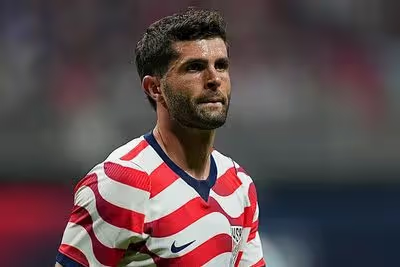
Christian Pulisic has now gone 17 straight matches without a goal for AC Milan, raising urgent questions as the 2026 World Cup looms. Once a regular starter and the USMNT’s attacking fulcrum, Pulisic’s drop to substitute appearances and sharp loss of form has put both club and country on edge, forcing an immediate need for minutes, confidence and a clear plan before June’s tournament kick-off.
Pulisic’s 17-game drought puts Milan and USMNT under pressure
Christian Pulisic’s prolonged scoring slump at AC Milan — 17 matches without finding the net — is more than a personal concern; it’s a tactical and psychological problem for two teams with high expectations. The 27-year-old began the season brightly but has trailed off, losing starting minutes as Milan chase Champions League qualification and the USMNT prepares for World Cup 2026.
From hot start to bench appearances
Pulisic exploded early in the campaign, contributing eight goals across the first four months and helping spark an 18-game unbeaten run for Milan. Since December, however, that output evaporated. He’s dropped in the pecking order, coming off the bench in multiple recent matches, including a 2–0 loss to Sassuolo that added pressure on Milan’s European ambitions.
What’s gone wrong: form, confidence and role
The decline is partly physical and partly mental. Form fluctuations are normal, but Pulisic’s fall has coincided with wavering confidence and inconsistent minutes. Tactical adjustments at Milan — shifting pressing triggers, less space for wide runners and rotation to manage a congested calendar — have not played to his strengths. Without regular rhythm or a defined, simplified role, elite attacking players can become tentative in and around the box.
Why this matters for the USMNT at World Cup 2026
The timing is brutal. With the United States co-hosting the World Cup, expectations are sky-high and the USMNT’s schedule includes a group — Paraguay, Australia and Türkiye — that looks manageable only if key contributors are firing. Pulisic remains a central figure in game plans; his current trajectory forces coach-level decisions on whether to deploy him as a starter, impact sub or tactical specialist.
Bench role vs. starting spot: trade-offs
Starting Pulisic risks exposing an out-of-form attacker early in the tournament, but relegating him to the bench sacrifices his experience and tendency to change games with dribbles and late runs. The ideal compromise is clarity: a defined role that maximizes his strengths (one-vs-one footwork, transitional bursts) while minimizing situations that highlight his dip in confidence.
How Pulisic can reverse course
Recovery hinges on minutes, confidence-building and tactical tweaks. Short-term solutions: more frequent full-match minutes at club level if possible, targeted training to restore finishing instincts, and simplified attacking duties that reduce decision overload. Psychological support — focusing on process over outcomes — is equally important; a couple of high-quality touches in friendlies can reset momentum.
Key short-term indicators to watch
Minutes played and touches in the box across Milan’s remaining fixtures will be the most concrete signals. Production in the USMNT friendlies against Senegal and Germany at the end of the month will matter even more — those matches are the last practical audition before World Cup rosters and roles are finalized.
Outlook: urgency, but not panic
This is a pivotal two-to-four week window. Pulisic’s drought is significant, but not career-defining. He still has elite attributes: pace, dribbling and an instinct for late runs. If Milan can restore minutes and the USMNT integrates him into a clear tactical plan, Pulisic can regain form in time for the tournament.
Kylian Mbappe hits back at critics over injury recovery ahead of El Clasico
If questions persist, the team will need contingency attacking plans that don't rely solely on his resurgence.
 Si
Si