Fanatics Fest at the Javits Center drew roughly 200,000 fans across four days, marrying World Cup momentum with celebrity spectacle — Tom Brady, Justin Bieber and Novak Djokovic headlined headline-making competitions while Ryan Reynolds bolstered Topps’ Marvel presence. The show put rare collectibles like multiple T206 Honus Wagner examples center stage, cost an estimated $80–$90 million, and exposed crowd-control and venue limits Fanatics must solve before expanding.
Fanatics Fest 2026 recap: scale, celebrities and the collectibles spectacle
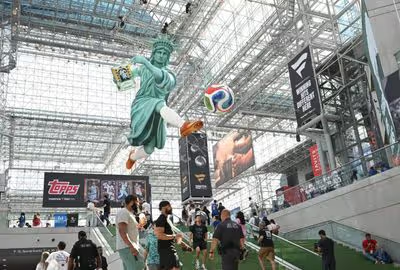
Fanatics Fest returned to the Javits Center as a full-throttle collision of sports, pop culture and the booming trading-card market. Timed to overlap with World Cup fever at nearby MetLife Stadium, the four-day event reportedly drew about 200,000 attendees and featured an unprecedented mix of athletes, entertainers, exclusive product drops and marquee moments.
The event’s scale was notable not just for attendance but for cost and ambition: estimates place the production at roughly $80–$90 million, underscoring Fanatics’ willingness to invest heavily in experiential retail and fandom.
Star moments that defined the event
Tom Brady delivered a viral half-court logoman shot and participated in skill challenges, reminding fans he treats these appearances as competitive performances. Justin Bieber emerged as a dominant presence in the Fanatics Games, turning pop-star charisma into on-floor success. Novak Djokovic mixed it up in ping-pong and basketball segments, reinforcing the festival’s cross-sport appeal.
Ryan Reynolds’ surprise appearance boosted Topps’ deadpool chrome visibility and offered a high-profile reminder of Marvel’s licensing partnerships. Rob Gronkowski’s dunk-tank gag with Raising Cane’s sauce and Karl‑Anthony Towns trading with kids on the show floor added light-hearted, memorable moments that played well on social media.
Collectibles center stage: rare cards and exclusive drops
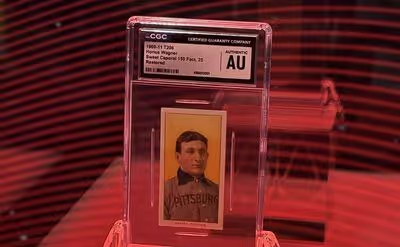
Multiple T206 Honus Wagner examples were on display across the floor — an awing sight for collectors and a reminder of the high-end market’s ongoing pull. The restored die-cut 1909 T206 Wagner, along with other vintage rarities, drew intense attention.
Modern highlights included an illustrated Jim Lee Tiger Woods autograph card, a Cam Schlittler Bowman 1st autograph graded PSA 10, and a Paul Skenes Topps Chrome Gold Logoman patch card showcased with a six-figure price tag. Small-run exclusives — like illustrated and signed pieces handed out at private events — reinforced how scarcity continues to drive headline value in the hobby.
Non-card showstoppers
A high-school-era autograph practice sheet from LeBron James offered an emotional collector’s moment when reunited on-site. Other surreal touches — celebrities paired with unexpected props, oddball booths from clubs across soccer’s lower tiers, and crossovers into WWE and film promotion — underscored the festival’s mash-up identity.
Operational cracks: crowding, routing and amenities
Biggest operational issue: congestion. The Topps area suffered severe bottlenecks where product pickup windows sat too close to main stages, creating long lines and crushed viewing areas for marquee guests like Victor Wembanyama and Cooper Flagg. The flow problems were compounded when event security temporarily cordoned areas to escort celebrities, leaving fans stuck in corners.
Food options also felt undercooked for an event built on stadium-culture vibes. Attendees repeatedly flagged limited and repetitive concessions — a missed opportunity to deepen the fan experience.
Why logistics matter
This scale of celebrity access and product scarcity requires choreography. If Fanatics wants to export the Fest to other cities or make it more frequent, improved layout planning, separated pickup zones and dedicated celebrity corridors will be essential to preserve fan goodwill and reduce safety risk.
What this means for Fanatics and the broader market
Fanatics Fest doubled as marketing engine and testbed for a company positioning itself at the center of fan commerce. High-profile appearances, Marvel/Topps tie-ins and exclusive card drops show a strategy that blends media spectacle with collectible economics.
The prominence of soccer-themed content — amplified by the nearby World Cup — points to Fanatics leaning into global football interest, which could shape future licensing and product pushes. Meanwhile, the persistent allure of vintage rarities alongside eye-watering modern cards signals a two-track collectibles market: emotional, historic icons and scarcity-driven modern memorabilia.
Where it goes from here
Expect Fanatics to iterate quickly. Operational fixes are low-hanging fruit: relocate pickup windows, widen celebrity corridors, add curated food zones and consider rotating host cities to refresh the festival’s appeal. On the product side, look for more exclusive drops and brand tie-ins that leverage celebrity appearances for immediate sales and long-term cultural resonance.
Fanatics Fest 2026 proved the formula works: celebrity spectacle sells, rare cards create headlines, and fan experiences can drive both commerce and brand buzz.
Neville: Messi's brilliance hid Argentina's flaws as Spain dominated World Cup final
The challenge now is scaling that success without letting logistics and crowd friction undermine the very fandom the event seeks to celebrate.
 Theathleticuk